On this page
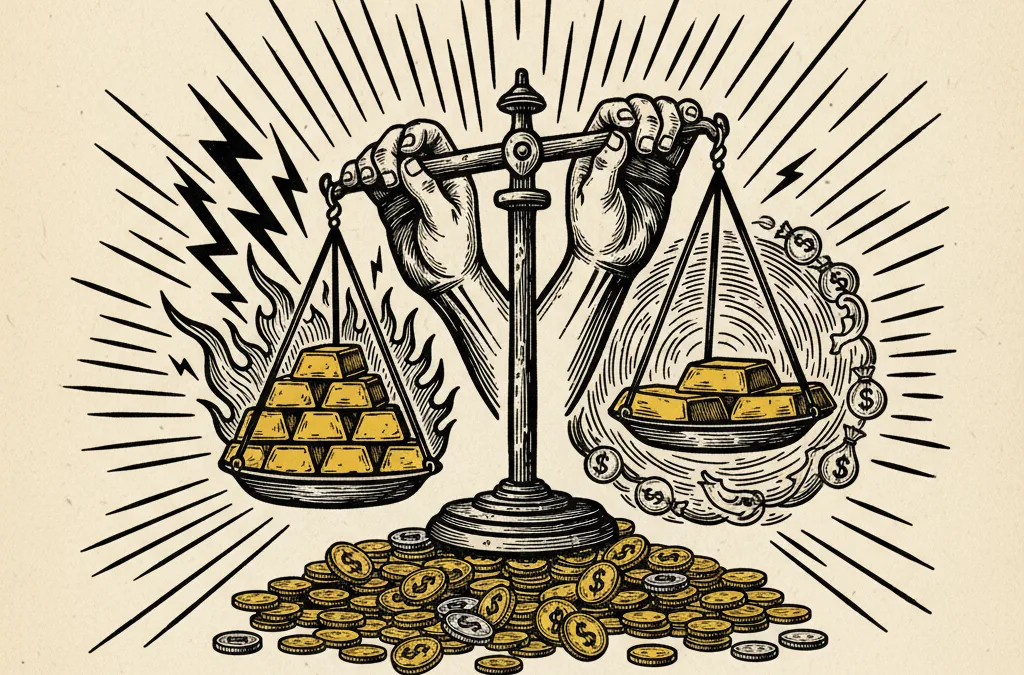
Gold Whipsaws in $166 Range as Iran Fears Collide With Profit-Taking
Gold swung violently between $4,444 and $4,611 on Monday as escalating Iran tensions pulled against a brutal monthly drawdown, leaving the metal caught between safe-haven demand and a market still digesting a 14% correction.
What to know
-
Gold traded a $166 intraday range on 30 March, settling near $4,545 - essentially flat on the day despite significant geopolitical escalation around Iran.
-
The metal is up 3.3% on the week but still down over 14% from its monthly high near $5,405, suggesting the recovery remains fragile.
-
Silver underperformed gold with a 1.84% weekly gain versus gold’s 3.33%, pushing the gold/silver ratio to 64.4 - a level that typically signals caution rather than conviction in the rally.
What happened
Gold posted one of its most volatile sessions of the year on Monday, carving out a $166 range between $4,444 and $4,611 before settling at $4,545 - virtually unchanged on the day. The flat close masks extraordinary intraday turbulence driven by two competing forces: fresh geopolitical risk from the Iran conflict and renewed policy uncertainty tied to Trump administration threats.
The weekly picture tells a more constructive story. Gold has clawed back 3.3% over the past five sessions, adding $146.50 from last week’s levels. But zoom out to the monthly view and the damage is stark - the gold price remains nearly $749 below where it stood at the start of March, a 14% drawdown from the $5,405 high that marked a period of peak speculative enthusiasm.
Silver followed a similar but weaker pattern, trading between $67.70 and $72.03 before settling at $70.55. The 1.84% weekly gain lagged gold meaningfully, and the 20% monthly decline in silver suggests industrial demand concerns are weighing more heavily on the grey metal than on its monetary counterpart.
Who’s involved
The key actors here are geopolitical rather than monetary. Iran conflict escalation has reintroduced a risk premium into gold that had been fading during March’s correction. The nature of Trump’s latest threats - while details remain fluid - adds a layer of policy unpredictability that gold tends to price aggressively.
Central bank buyers, who have been the structural backbone of gold’s multi-year rally, are likely viewing the pullback from $5,405 as an accumulation opportunity. The speed of the 14% correction was unusual for a market with this level of sovereign demand underneath it, and the bounce from the $4,100 monthly low suggests institutional bids materialised well before the geopolitical catalyst arrived.
Speculative positioning appears split. The flat daily close despite the wide range points to aggressive selling into strength - likely from momentum traders who bought the dip last week and are now taking profits into geopolitical headlines. Conviction is thin on both sides.
Why it matters
The gold/silver ratio at 64.4 is worth paying close attention to. In previous geopolitical escalation cycles - particularly during the 2024 Middle East tensions - gold consistently outperformed silver as capital rotated into pure monetary hedges over industrial-adjacent metals. That pattern is reasserting itself now.
The broader context is a market trying to establish a floor after a correction that wiped nearly $1,300 off the price from peak to trough. A 14% drawdown in a single month is significant by any historical standard, and the fact that gold has stabilised above $4,400 rather than retesting the $4,100 low is constructive.
German regional CPI data releasing today could further influence direction. Hotter-than-expected inflation prints from Baden-Württemberg, Hesse, and Bavaria would strengthen the case for sustained safe-haven demand - particularly for European buyers who have watched gold’s euro-denominated price hold up better than the dollar price during this correction.
What to watch
Three things are on my radar this week. First, whether gold can hold above $4,500 on a closing basis - this level has become a psychological pivot, and two consecutive closes below it would suggest the recovery is losing momentum.
Second, the gold/silver ratio trajectory. A move above 66 would signal that the market is pricing genuine escalation risk rather than a routine geopolitical bid. Silver’s underperformance is the canary here.
Third, oil prices. The Iran conflict has pushed crude higher alongside gold, and the correlation between the two during Middle Eastern escalation events tends to amplify both moves. If oil sustains its gains through the week, gold’s floor becomes considerably more robust. If oil fades, gold will likely follow - but the $4,400 level has held twice now, and another test would clarify whether this is a genuine base or just a pause before further downside.
This article is for informational purposes only and does not constitute financial advice. Always do your own research before making investment decisions.