On this page
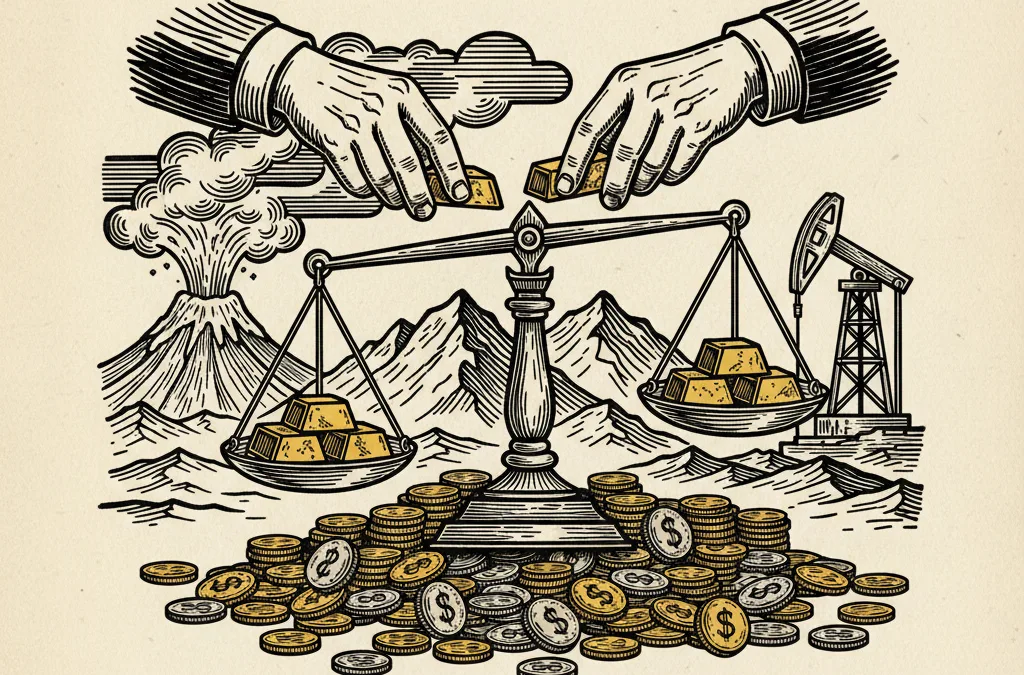
Gold Drops Despite Iran War - Why Safe Havens Fail
Gold’s failure to rally during a major geopolitical conflict challenges the metal’s safe-haven reputation, but the explanation lies in how modern wars interact with dollar strength and liquidity dynamics.
What to know
-
Gold sits at $4,415/oz - flat on the week despite escalating conflict with Iran, defying the typical safe-haven playbook.
-
The gold-silver ratio has compressed to 63.5, suggesting industrial metals sentiment is holding up better than fear-driven positioning.
-
Japan’s latest inflation data could shift the yen-dollar dynamic this week, adding another variable to gold’s near-term direction.
What happened
Gold is trading at $4,415/oz and has gone essentially nowhere over the past week - flat on the day, flat on the month - while an active military conflict involving Iran dominates headlines. For a metal that built its modern reputation on geopolitical fear, this is a notable non-event.
The broader precious metals complex tells a similar story. Silver holds at $69.55/oz, platinum at $1,865/oz, and palladium at $1,435.50/oz - all unchanged. The market is not panicking. It is not even fidgeting.
Who’s involved
Central banks remain the dominant structural buyers of gold, having accumulated at record pace over the past three years. But their buying is programmatic, not reactive to headlines. They are not chasing price on Iran news.
Institutional allocators appear to be running a familiar wartime trade - rotating into the US dollar as the primary safe haven rather than gold. This is a pattern we have seen repeatedly since 2022. When conflict erupts, the dollar tends to strengthen first, which paradoxically pressures dollar-denominated gold even as fear rises.
Retail investors seem caught between two instincts. The impulse to buy gold on war headlines is colliding with the reality that gold’s price has already risen enormously - from roughly $2,000/oz in early 2024 to $4,415 today. That 120% move in two years means the safe-haven premium is arguably already baked in.
Why it matters
Gold’s non-reaction to the Iran conflict is instructive, not alarming. It reveals something important about how precious metals behave at elevated price levels during geopolitical stress.
The 2003 Iraq invasion offers a useful comparison. Gold actually fell 7% in the two weeks following the initial strikes, only to recover and push higher over the subsequent months. The pattern repeated during the early phase of Russia’s invasion of Ukraine in 2022 - an initial spike followed by a sharp pullback as the dollar surged and margin calls forced liquidation across asset classes.
What we are seeing now fits this template. Wars create uncertainty, but they also create dollar demand. Energy disruption fears - particularly relevant with Iran given the Strait of Hormuz - push oil higher, which strengthens the petrodollar recycling loop. Gold gets squeezed from both sides: the dollar rises and real yields hold firm as central banks signal they will not ease policy in response to supply-driven inflation.
The compressed gold-silver ratio at 63.5 is worth noting. Historically, this ratio spikes above 80 during genuine fear episodes. Its current level suggests the market is pricing in economic resilience rather than crisis. Silver’s industrial demand component is holding the ratio tight, which tells us manufacturing expectations have not collapsed despite the conflict.
What to watch
Japan’s inflation print landing this week could matter more for gold than any Iran headline. If Japanese inflation continues to run hot, the Bank of Japan faces pressure to tighten further, which would strengthen the yen against the dollar. A weaker dollar would give gold the tailwind it currently lacks.
Beyond that, three things to watch: whether the $4,400 level holds as support - a break below would suggest institutional selling is accelerating. Second, oil prices and any disruption to Strait of Hormuz shipping, which would be the escalation scenario that genuinely moves gold higher. Third, US Treasury yields - if 10-year real yields start falling on recession fears tied to the conflict, gold’s safe-haven bid could reassert itself.
This article is for informational purposes only and does not constitute financial advice. Always do your own research before making investment decisions.