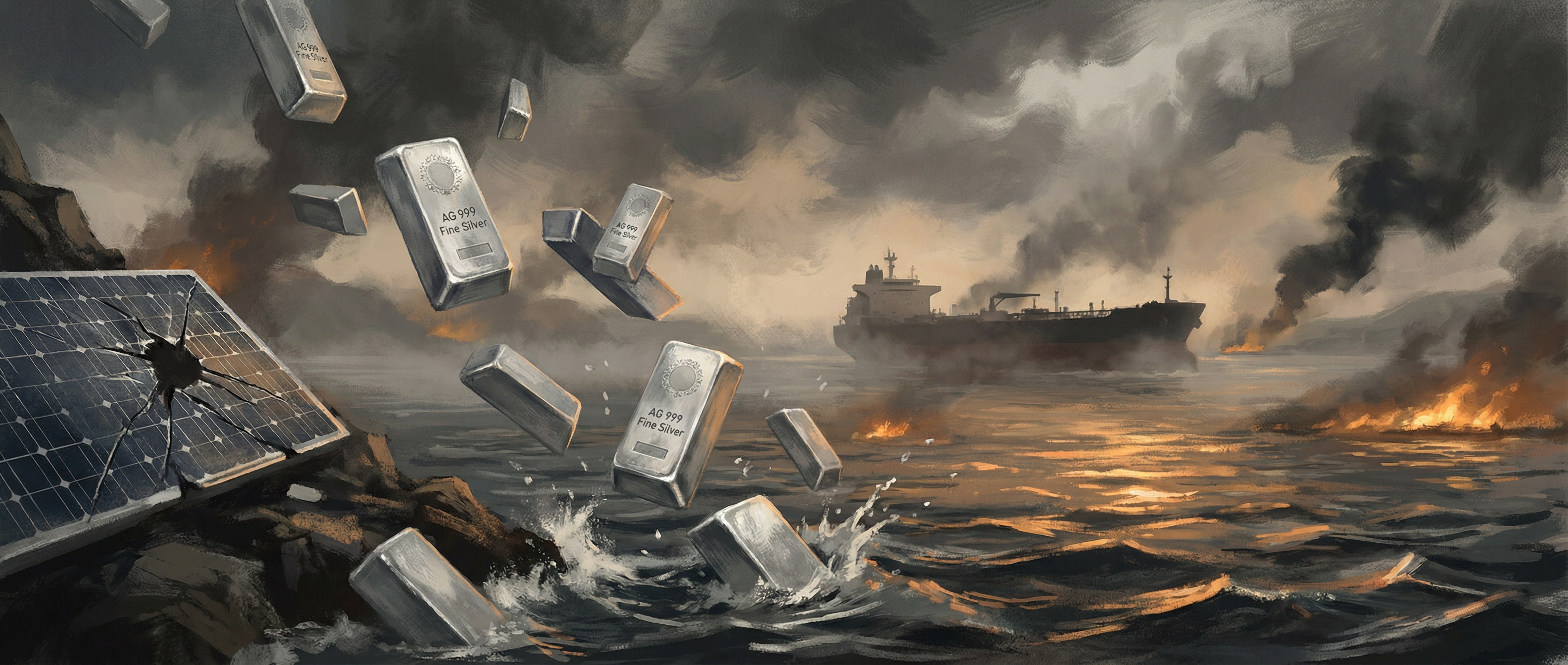
Silver in February 2026 was not an investment. It was a stress test.
The metal began the month at $85, having crashed from its record high of $121 the previous week. It then crashed again - to $64 - before anyone had fully processed the first crash. By month-end, silver had recovered to approximately $93. Not quite where it started February, but almost. Given what it went through, that recovery is remarkable.
The question for investors is whether this is silver proving its resilience, or silver completing the first leg of a major correction before the real unwind begins. We genuinely don’t know. What we do know is that the story has changed in important ways since January.
What actually happened
Crash one: the Warsh shock (January 30)
Silver hit an all-time high of $121.65 on January 29. The following day, it recorded its worst single session ever - falling approximately 30% as Trump announced Kevin Warsh as incoming Federal Reserve chair.
The reasoning: Warsh is associated with monetary restraint. Silver had rallied in part on the assumption of continued dollar weakness and loose monetary conditions. When that assumption was challenged, highly leveraged positions unwound immediately.
CME had simultaneously raised margin requirements - silver from 11% to 15% of contract value. Many investors could not meet the calls. Forced selling amplified what had already begun.
The result was a metal that had been at $121 one day trading at $80 the next.
Crash two: the February 5–6 flash crash
Three trading days later, silver crashed again.
Having briefly recovered to $87.95, it plunged back to $64 on February 5–6. This time, the amplifiers were:
- A broader risk-asset selloff: Bitcoin fell 18%, stock futures declined
- The dollar spiked to a 24-month high (DXY 106.5) as the Warsh “sound money” thesis took hold
- CME raised margins a second time (silver now at 18%)
- Automated sell programs triggered at key support levels
- London precious metals market experienced severe liquidity stress - buyers effectively disappeared for a period
The $64 low was not driven by any change in silver’s fundamentals. It was a liquidity event, amplified by extreme leverage and cascading margin calls.
The recovery
From $64, silver staged one of its periodic violent reversals. By February 11, it was back above $82. By February 27, it had reached $93.82. The recovery tracked the broader precious metals rebound as:
- The Warsh shock was digested (his approach is hawkish but not dramatically more so than feared)
- January CPI data (2.4%) reinforced rate cut expectations
- Tariff chaos (new 15% global import tariff, February 23) drove safe-haven demand
- Iran nuclear talk failures renewed geopolitical risk
- Then, on February 28, US-Israel strikes on Iran and the Strait of Hormuz closure sent precious metals sharply higher into month-end
Silver closed February at approximately $93, extending its streak of consecutive monthly gains to ten.
The ratio: a story in itself
The gold-silver ratio compressed to a historic 43:1 at the January peak (gold $5,594, silver $121). This was an extraordinary reading - the tightest ratio since the brief Hunt Brothers-era spike of 1980.
Through February’s crashes and recovery, the ratio blew out to 61:1 at its widest point (when silver was near its lows and gold had partially stabilised). As of month-end, with gold at $5,274 and silver at ~$93, the ratio sits at approximately 57:1.
| Date | Gold | Silver | Ratio |
|---|---|---|---|
| January 29 (peak) | $5,594 | $121 | 46:1 |
| February 6 (silver low) | ~$5,000 | $64 | 78:1 |
| February 28 (close) | $5,274 | ~$93 | 57:1 |
The ratio’s violent expansion and partial contraction in a single month is unusual even by silver’s standards. It tells a specific story: silver carried significantly more speculative leverage than gold, and that leverage was violently ejected in February.
What remains is the structural position. At 57:1, the ratio is still below its five-year average of approximately 80:1. It is above the January extreme. Silver is neither as compressed as it was, nor as stretched as it was in 2020.
The thrifting threat: now real
In January, we described the thrifting risk as a threat. In February, it became a confirmed trend.
The Silver Institute’s February 10 forecast confirmed what solar manufacturers had been saying privately:
- Industrial silver fabrication forecast to fall 2% in 2026 to a four-year low of 650 million ounces
- The decline is attributed directly to silver thrifting - reduced silver content per solar cell - and substitution research into copper-based conductive pastes
- Solar manufacturers are “very motivated” at $90+/oz silver - R&D budgets for silver substitution have expanded materially since prices broke $100
This is the structural tension in silver that gold does not face. Gold’s investment demand is not price-elastic in the same way - central banks and institutional investors do not reduce purchases because the price is high. Industrial users of silver absolutely do. At $120/oz, every solar panel manufacturer employs engineers whose job is to use less of it.
The 2% decline in fabrication demand is not catastrophic - but it is directionally significant. It confirms the bull case is not automatic.
Why silver hasn’t collapsed despite the thrifting trend
Three offsetting forces matter:
1. The structural deficit persists
Silver has now been in deficit for six consecutive years. The 2026 shortfall is estimated at 67 million ounces - significant even with reduced industrial fabrication. The deficit persists because:
- Primary silver mining supply is constrained (ore grades have declined 35% since 2007)
- Most silver comes as a byproduct of lead, zinc, and copper mining - supply cannot simply be expanded in response to silver price signals
- China’s export restrictions, implemented January 1 and still in force, have removed a meaningful portion of refined supply from Western markets
2. Recycling is rising but slowly
The Silver Institute forecasts scrap recycling will rise 7% in 2026, exceeding 200 million ounces for the first time since 2012. Notably, recycling from end-of-life solar panels is now a measurable supply source - a structural feedback loop that takes years to mature. This is supply that grows over time but cannot respond quickly to short-term price spikes.
3. Investment demand is substituting for industrial demand
Where industrial fabrication is declining, investment demand is rising. Silver’s simultaneous role as a monetary metal means institutional and retail investment flows can partially offset reduced industrial usage - as occurred during 2011-2012 when investment demand ran at record levels.
The China factor: still the dominant supply variable
China’s January 1 export restrictions on refined silver remain in force as of March 1. There has been no softening, no exemptions, and no indication that the policy will change.
China controls approximately 60–70% of global silver refining capacity. It needs the silver for its own solar and EV production. The restrictions are a structural supply constraint, not a short-term negotiating tactic.
When silver spiked to $64 in early February, London vault inventory drawdowns accelerated. Lease rates - the cost to borrow physical silver - remained elevated throughout the month, confirming genuine physical tightness rather than a purely paper-market phenomenon.
The US critical mineral designation
Silver was added to the USGS Critical Minerals List in November 2025. The policy implications continued to develop through February:
- Fast-tracked domestic mining permits are now being processed
- Federal stockpiling initiatives are under discussion
- The designation creates eligibility for Fast-41 permitting and domestic production subsidies
The US currently imports 64% of its silver consumption. The combination of China’s export restrictions, the critical mineral designation, and the Iran supply shock now hitting oil-dependent transport routes creates a convergence of supply risk that policymakers are only beginning to price.
The Iran dimension: what it means specifically for silver
The broader geopolitical impact on precious metals is covered in our February gold report. But silver has specific dynamics worth understanding:
Safe haven demand: Silver benefits from the same flight-to-safety bid as gold. In the immediate aftermath of the strikes, both metals surged. Tokenised gold was trading at $5,344 on March 1; silver moved proportionally.
Energy price impact: This is where silver’s industrial character creates complexity. Oil at $100+/barrel raises energy costs for silver smelters and miners. It also raises the cost basis for solar panel production. Higher energy costs could accelerate thrifting (manufacturers have more incentive to reduce silver content when energy is also expensive) or slow solar deployment (fewer panels built = less silver demand).
Supply chain disruption: Approximately one-third of seaborne oil flows through the Strait of Hormuz. Silver supply chains - including shipments from Asian refiners to Western markets - depend on those same trade routes. A prolonged closure would add logistical disruption on top of the existing China restriction.
The net effect on silver from the Iran conflict is ambiguous in a way it isn’t for gold. For gold, geopolitical chaos is mostly straightforward. For silver, it depends on how the energy shock interacts with industrial demand - and that is genuinely hard to predict.
How to buy silver in 2026: has anything changed?
The tax structure hasn’t changed. The practical considerations remain the same as January, but the price environment has shifted substantially.
UK-listed silver ETCs
At $93/oz silver, the VAT hurdle on physical silver is even more material. A 20% VAT on a £5,000 silver purchase means silver needs to rise to roughly £111/oz just to break even in sterling terms. UK-listed silver ETCs are not subject to that VAT, and offer exchange-traded liquidity.
UK-listed silver ETCs are controlled investments under FSMA — see the factual silver ETC reference page for the current set of products with tickers, TERs and vault arrangements. Each provider’s KIID sets out the specific cost, custody and tax-treatment profile.
ISA season is approaching (April 5 deadline). Gains on silver ETCs held inside a Stocks & Shares ISA are sheltered from CGT, which matters more on a volatile asset class like silver (30%+ monthly moves are not unusual). Suitability of any specific product or wrapper is a personal question for a regulated adviser.
Physical silver
If you want physical silver despite the VAT, Silver Britannias remain the only sensible choice for UK buyers. CGT exemption partially compensates for the 20% VAT hit - but only if you hold through significant appreciation.
The reality at current premiums: you might pay 30–40% over the paper price to hold silver coins in your hand. At $93/oz paper price, that equates to roughly $120–130 effective cost. You need silver to rise substantially just to recover acquisition cost.
Dealers (UK): BullionByPost, Atkinsons Bullion, Chards, The Royal Mint. Premiums are elevated across all of them due to demand.
Mining stocks
Silver mining equities are a separate category. Their prices are influenced by the silver price but also by operating costs, jurisdictional risk, hedging policy and equity-market sentiment — they are not a substitute for the metal and they sit firmly on the controlled-investments side of the FSMA line. UK readers who want exposure to that part of the supply chain should research individual issuers and platforms through their own broker, read the relevant fund factsheets or company filings, and speak to a regulated adviser if they want a view on suitability.
The volatility context (updated)
We said this in January. February proved the point beyond any reasonable doubt.
Silver fell from $121 to $64 — a 47% decline — in approximately one week. It then recovered roughly 45% from that low within the same month. These are not normal asset-class moves. They are the moves of a small, heavily-traded market under extreme leverage stress.
The 2011 parallel remains instructive: silver peaked at ~$50 and crashed to $14 over four years. A 70% decline from an even more extreme starting point. The fundamentals are arguably stronger now than in 2011 — but “stronger fundamentals” did not prevent the 2011 crash, because that crash was driven by leverage and speculative unwinding rather than fundamentals.
For UK readers: leveraged silver instruments (CFDs, spread bets, leveraged ETCs) are controlled investments and amplify exactly the kind of moves February produced. We are not authorised to advise on the suitability of any of them. Anyone holding or considering them should consult a regulated adviser who can assess their personal circumstances and risk tolerance.
Our take
Here is where we stand, honestly.
What the February data supports
-
The structural case is intact. Six consecutive years of supply deficit, China export restrictions, critical mineral designation, and genuine industrial necessity do not disappear because of price volatility.
-
The thrifting risk is more real than it was. A 2% forecast decline in industrial fabrication is not trivial. If silver stays above $90 for an extended period, substitution will accelerate. This is not the end of the bull case - but it is a genuine headwind that January’s $121 price level had perhaps dismissed too easily.
-
Leverage was the problem, not fundamentals. Both February crashes were leverage events, not fundamental reversals. The physical market - lease rates, vault drawdowns, dealer premiums - showed tightness throughout. That tightness did not prevent the crash. But it does suggest the recovery from the crash was driven by real buying, not just short-covering.
-
The Iran conflict changes the near-term calculus. Safe-haven demand, oil shock, and Hormuz supply chain risk all add urgency to precious metals positions. Silver benefits from the same safe-haven bid as gold - but the industrial complexity means the Iran tailwind is less clean than it is for gold.
-
The volatility is not a bug. Silver will continue to experience 10–20% moves on no fundamental news. That is a structural feature of the market — whether and how to take exposure to it is a question for a regulated adviser, not a monthly note.
What we don’t know
Whether solar thrifting accelerates fast enough to overwhelm the structural deficit - this depends on R&D timelines that nobody can reliably predict. Whether China’s export restrictions become permanent policy or a negotiating chip. Whether the Iran conflict produces a quick ceasefire or a prolonged disruption. These uncertainties are genuine, and anyone claiming certainty about silver’s near-term direction is telling you more than the data supports.
What could change the picture
Silver’s volatility makes precise targets unreliable, so it is more useful to describe the conditions that could shape the next several months than to put a number on them.
- Conflict contained — supply deficit intact, gradual rate cuts return, silver tracks gold higher with the deficit narrative regaining attention.
- Conflict escalates / safe-haven bid extends — Iran-driven volatility persists, ETF inflows accelerate, and the assumption that thrifting offsets the deficit proves slower than feared.
- Thrifting accelerates faster than expected — combined with an Iran ceasefire that removes the geopolitical premium and a Warsh-led Fed that signals balance sheet tightening. Multiple support pillars weaken at once.
These are conditions to watch, not forecasts. Probabilities are not attached because the variables (geopolitical, monetary, industrial) are too interconnected to model honestly. Anyone making a position decision on the back of monthly analysis should consult a regulated adviser.
Frequently asked questions
What happened to the silver price in February 2026?
Silver experienced two severe crashes in February 2026. The first, on January 30, saw it fall approximately 30% from its all-time high of $121.65 as Trump nominated Kevin Warsh (a monetary hawk) as incoming Fed Chair and CME raised margin requirements, forcing mass liquidations of leveraged positions. The second crash, on February 5–6, took silver from $87 to $64 as a broader risk-asset selloff hit simultaneously with a dollar surge and further margin hikes. Silver then recovered to close the month at approximately $93 - its tenth consecutive monthly gain.
Why did silver crash so hard in February 2026?
The crashes were leverage events, not fundamental reversals. Silver had attracted enormous speculative positioning during its 270% rally. When margin requirements were raised and other risk assets sold off, brokers issued margin calls that holders could not meet, triggering forced selling at any price. The physical silver market - as evidenced by lease rates and vault drawdowns - showed genuine tightness throughout. The paper market crashed; the physical market did not.
What does the February crash mean for silver as an asset class?
The structural case — supply deficit, China export restrictions, industrial necessity, critical mineral status — remains intact. However, February confirmed the thrifting risk is real: industrial fabrication is forecast to fall 2% in 2026 as solar manufacturers accelerate substitution R&D at these price levels. The trade-off is potentially significant returns alongside extreme volatility (47% drawdown in a week, in February alone). Whether silver is appropriate for any given individual’s portfolio — and at what weighting — is a question for a regulated adviser, not a monthly note.
How does the Iran conflict affect silver in 2026?
The US-Israel strikes on Iran (February 28) and subsequent Strait of Hormuz closure (March 1) affect silver through several channels: safe-haven demand (same as gold), oil price shock (higher energy costs affect mining and manufacturing), and supply chain disruption (trade routes through the Strait carry refined metals and components). The near-term cross-currents are mixed: silver’s industrial character means high energy prices can accelerate thrifting at the same time as geopolitical risk supports investment demand. There is no clean directional conclusion to draw from those mechanics.
What is the gold-silver ratio telling us in February 2026?
The ratio compressed to an extreme 43:1 in January (at silver’s $121 peak) and blew out to 78:1 at silver’s $64 low in early February, closing the month at approximately 57:1. The violent ratio swing reflects silver’s greater speculative leverage relative to gold. At 57:1, the ratio is below its five-year average of ~80:1 but well above the January extreme. Silver bulls interpret this as silver still being “cheap” relative to gold. The more honest reading is that the ratio reflects silver’s higher volatility, not a persistent mispricing.
How are UK silver buyers handling the 20% VAT on physical silver?
UK retail silver coins and bars attract 20% VAT, which is unusual among investment metals. The routes UK buyers commonly use are: (1) UK-listed silver ETCs — these are controlled investments that are not subject to VAT on purchase and can sit inside a Stocks & Shares ISA, but they introduce counterparty exposure and have their own cost and tax characteristics — see our factual ETC reference page and consult a regulated adviser; (2) Physical Silver Britannias — VAT applies upfront, but as UK legal tender they are CGT-exempt; (3) VAT-free bonded storage offered by some dealers, holding silver in jurisdictions where retail VAT does not apply. Each route has different costs, tax treatment and counterparty profile; there is no single “best” answer.
This is the February 2026 edition of MetalsAlpha: State of Silver. The Iran military situation remains active as of March 1, 2026. We publish monthly updates analysing the precious metals market for UK investors. This is not financial advice - we are investors sharing what we have found.