On this page
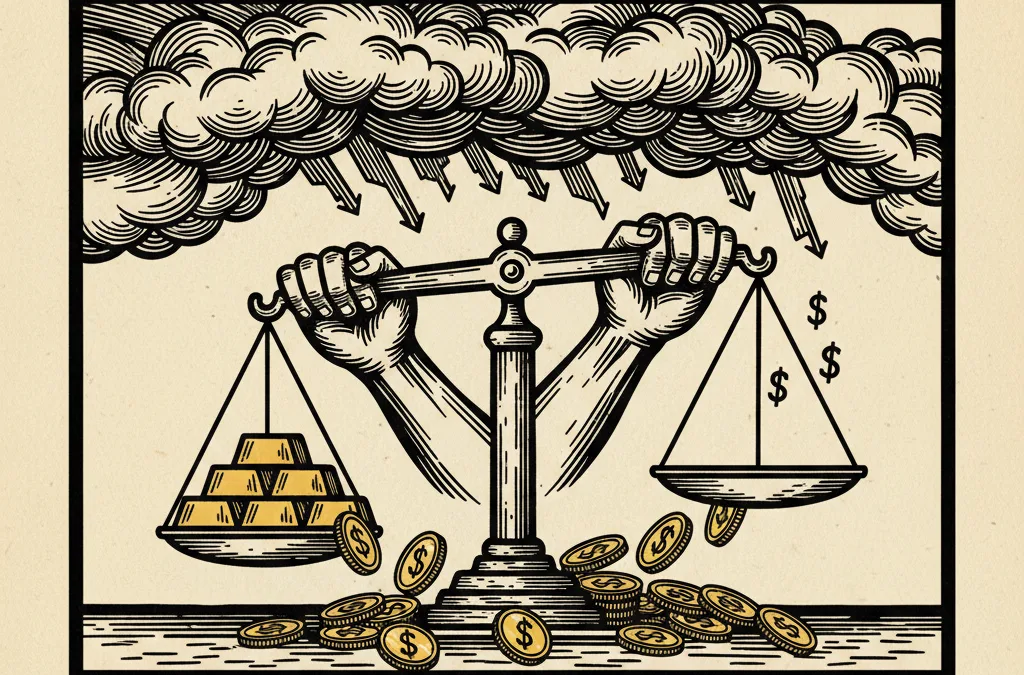
Gold Slips Below $5,000 as Fed Doubt Builds
Gold has fallen beneath $5,000/oz for the first time in months as sticky inflation forces traders to reprice Federal Reserve rate expectations, removing a key support for the rally that dominated 2025.
What to know
- Gold is trading at $4,990/oz after breaking below $5,000 - the first breach since the level was established
- Persistent inflation is delaying expected Fed rate cuts, undermining the case for non-yielding assets
- The gold-silver ratio sits at 62.1, with silver holding $80.38/oz despite gold’s weakness
What happened
Gold has dropped to $4,990, breaking the $5,000 threshold that held since early in the year. The move is modest in percentage terms - around 3% from recent highs - but round-number breaches tend to accelerate sentiment shifts. Traders who bought above $5,000 are now holding losses, and the technical picture has turned negative on shorter timeframes.
Silver is at $80.38/oz, keeping the gold-silver ratio at 62.1 - well below the 80-plus levels seen in the early 2020s. Platinum sits at $2,093.80/oz and palladium at $1,607.50/oz. Neither is showing the kind of safe-haven bid that would indicate broad defensive positioning across precious metals.
Who’s involved
The Federal Reserve is driving the repricing. Inflation has proven stickier than markets anticipated heading into 2026, and recent FOMC communications have adopted a noticeably hawkish tone. Rate-cut expectations that underpinned gold’s climb to $5,000 are being pushed further out, and some analysts now question whether cuts arrive at all this year.
Institutional investors who rode the rally from $3,000 are reassessing. Central bank buying and geopolitical hedging remain intact, but the rate narrative is weakening - enough to trigger profit-taking at these levels. Retail positioning data shows a shift to bearish sentiment, and the loss of $5,000 risks becoming self-reinforcing if momentum traders begin shorting.
Why it matters
Gold’s relationship with real interest rates is the dominant factor. When inflation runs hot but the Fed signals reluctance to cut, real yields rise and gold loses appeal against yield-bearing assets. That dynamic is now reasserting itself after months of being overshadowed by geopolitical and central bank demand.
The altitude matters. Gold correcting from $5,000 is different from correcting from $2,000. Dollar losses are larger, margin calls hit harder, and breaching a landmark level can accelerate selling. When gold briefly dipped below $2,000 in late 2023, it recovered within weeks - but the macro backdrop was more accommodative then.
This week’s data adds complexity. The NY Empire State Manufacturing Index is due today and may signal US economic momentum. Canadian inflation data could influence North American price pressure expectations. Chinese retail sales and industrial production figures will shape global growth assumptions and safe-haven demand.
What happens next
The $4,950 level is the next support zone. A break below that opens the door to $4,800, which was a consolidation area during gold’s earlier ascent. Reclaiming $5,000 quickly - within days - would suggest the breach was a false break and buyers are still willing to defend the level.
Fed communications over the next fortnight are critical. Hawkish dissent in upcoming FOMC minutes or delayed rate guidance could deepen the selloff. Softer inflation prints would likely trigger a snapback given how much bearish sentiment has accumulated. The gold-silver ratio is also worth monitoring - if it widens back towards 70, it would indicate silver is joining the selloff rather than this being a gold-specific repricing.
This article is for informational purposes only and does not constitute financial advice. Always do your own research before making investment decisions.