On this page

Gold’s Worst Weekly Plunge Since 1983 - But Is It Over?
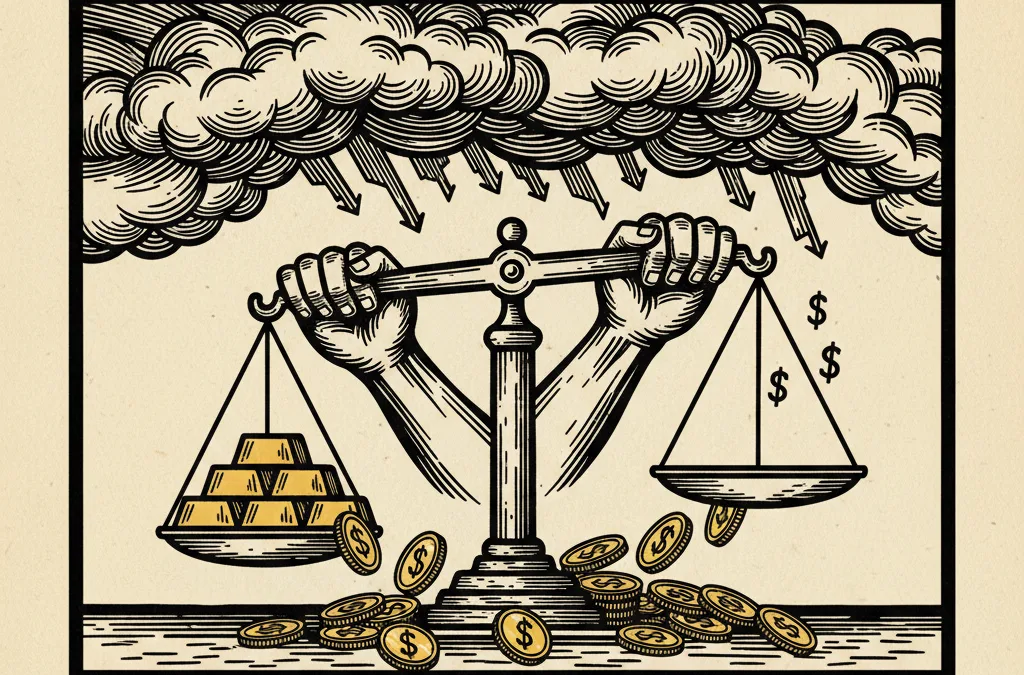
Gold has shed nearly 15% in a month - its sharpest correction in over four decades - yet the macro backdrop that fuelled the rally remains entirely intact.
What to know
-
Gold is trading at $4,460/oz after falling from a monthly high of $5,405, a drawdown of nearly 18% peak to trough.
-
Silver has been hit even harder, down over 25% on the month, pushing the gold/silver ratio to 64.8.
-
The sell-off marks the worst weekly percentage decline since 1983, when gold was unwinding from its post-Hunt Brothers spike.
What happened
Gold has been in freefall. After touching $5,405 earlier this month, the gold price has cratered to $4,460/oz - a staggering $945 decline representing a near-18% peak-to-trough correction. The weekly drop that triggered the headlines was the worst since 1983, when gold was still digesting the aftermath of the Hunt Brothers silver squeeze and Paul Volcker’s aggressive rate regime.
The month-on-month picture is brutal: gold is down $770, or 14.7%. Silver has fared even worse, shedding over 25% to trade at $68.81/oz. Palladium has slipped 1.8% on the week, while platinum has held relatively steady, up a marginal 0.3%.
This correction is unusual because the backdrop has not changed. Middle East tensions have not eased. Inflation remains sticky. The conditions that typically support gold are still present - yet the metal has sold off with a violence that suggests something structural shifted in positioning.
Who’s involved
Leveraged longs got squeezed. When gold ran above $5,000, speculative positioning in futures markets was stretched to extremes. A correction of this magnitude - particularly one that accelerates rather than stabilises - is consistent with margin calls forcing liquidation across the complex. Silver’s outsized 25% decline reinforces this reading; it is always the more leveraged, more volatile sibling.
Central banks, which have been consistent buyers for the past three years, are unlikely sellers at these levels. Their accumulation has been strategic and price-insensitive. The selling pressure is coming from the speculative side of the market - hedge funds, momentum traders, and algorithmic strategies that flip from long to short when key technical levels break.
The dollar has also played a role. Inflation expectations, while elevated, have prompted markets to reprice the Federal Reserve’s rate path. Higher-for-longer rate expectations strengthen the dollar and raise the opportunity cost of holding gold - a classic headwind.
Why it matters
The 1983 comparison is instructive but imperfect. That sell-off came after gold had already been in a multi-year bear trend following the 1980 blow-off top. Today’s correction is occurring within what remains a structural bull market. Gold started 2026 well above $4,000 and the long-term demand drivers - central bank buying, de-dollarisation, fiscal deficits - have not reversed.
A 15-18% correction in a bull market is painful but not unprecedented. Gold pulled back roughly 20% in mid-2024 before resuming its climb. Whether the $4,100 low printed this month holds as support, or whether the liquidation has further to run, is unclear.
The gold/silver ratio at 64.8 suggests silver has been disproportionately punished. Historically, when the ratio spikes during sell-offs and then compresses, it signals the beginning of a recovery phase. That compression has not yet started.
What to watch
Michigan Consumer Sentiment data due today will offer a fresh read on inflation expectations. If consumers still see prices rising, it reinforces the case for gold as a hedge - even if the short-term trade is against it. UK retail sales figures, also out today, will add colour to the global demand picture.
Technically, the $4,100-$4,200 zone is the line in the sand. Gold bounced hard off $4,100 earlier this month and has since recovered to $4,460, suggesting buyers are willing to step in at those levels. A decisive break below $4,100 would open the door to a deeper correction toward $3,800.
Three things matter now: the pace of ETF outflows, which will confirm whether institutional holders are capitulating or holding firm; COMEX positioning data for evidence the speculative flush is complete; and the dollar index, which remains the single most important short-term driver.
This article is for informational purposes only and does not constitute financial advice. Always do your own research before making investment decisions.