On this page
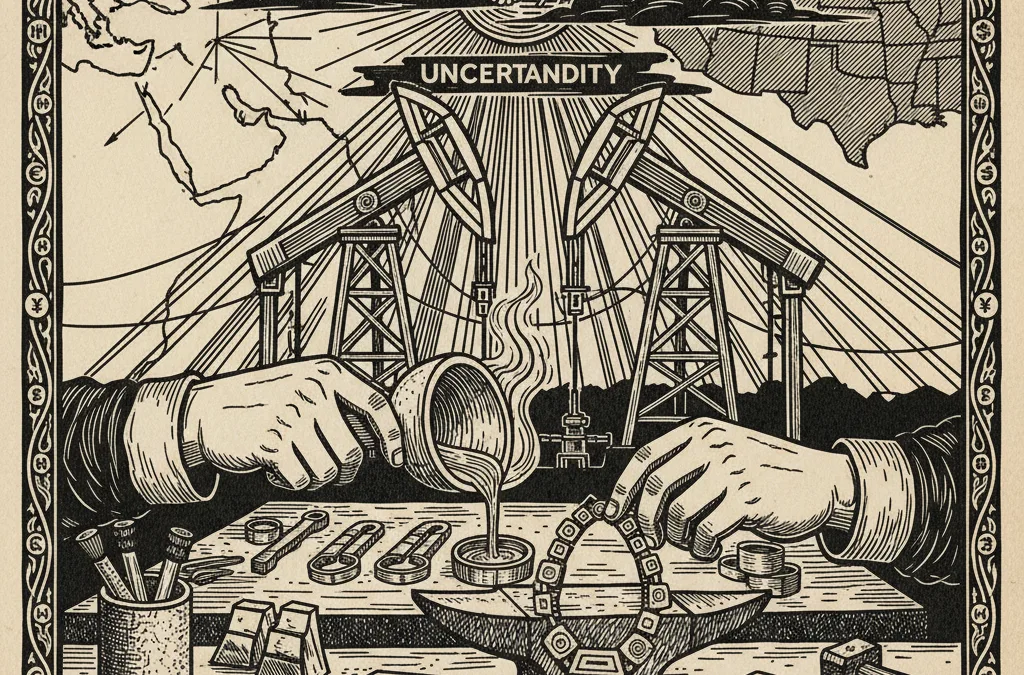
Gold Holds Near $4,800 Even as Iran Talk Hopes Cool Demand
A renewed diplomatic push between Washington and Tehran has trimmed gold’s geopolitical risk premium, yet the metal is quietly consolidating above $4,800 - suggesting buyers see deeper reasons to stay long.
What to know
-
Gold is trading at $4,809.50/oz, up 1% on the week but down 3.7% over the past month after retreating from a high near $5,018.
-
Renewed US-Iran diplomatic engagement is easing Middle East risk sentiment, reducing the geopolitical bid that had supported gold earlier in 2026.
-
Upcoming high-impact data - including China GDP and UK GDP releases on 16 April - could shift the macro narrative and drive the next directional move.
What happened
Gold is sitting at $4,809.50/oz, holding a modest 1% weekly gain while digesting a sharp 3.7% pullback over the past month from the $5,017.60 high printed in late March. A renewed diplomatic push between the United States and Iran has taken some heat out of Middle East risk pricing.
The intraday range on 16 April - between $4,792.10 and $4,861.30 - shows a market caught between two forces. Dip buyers are active below $4,800, but rallies toward $4,860 are meeting sellers who see the geopolitical premium as overdone now that talks are back on the table. Tracking the live gold price over the past fortnight reveals a market that has been grinding sideways rather than extending the sell-off.
Silver has actually outperformed this week, gaining 2.8% to $78.47/oz and compressing the gold/silver ratio to 61.3. Platinum (+2.85%) and palladium (+2.91%) have followed a similar pattern, suggesting the bid in precious metals is broader than just a geopolitical hedge.
Who’s involved
Washington’s willingness to re-engage with Tehran marks a shift in posture. Throughout Q1 2026, escalating rhetoric around Iran’s nuclear programme and Gulf shipping lanes had been a persistent tailwind for gold. That premium is now being partially unwound as markets price in a non-trivial probability of a framework agreement - or at least a sustained period of reduced confrontation.
Central bank buyers remain the structural anchor. Sovereign demand has been a dominant theme since 2023, and nothing in the current diplomatic thaw changes the diversification logic driving reserve managers away from dollar-heavy portfolios. The People’s Bank of China, in particular, continues to be a consistent accumulator.
Speculative positioning appears to have lightened during the pullback from $5,018. Managed money longs were trimmed as the geopolitical narrative softened, but the speed of the consolidation - rather than a deeper correction - hints that institutional conviction in the longer-term bull case remains intact.
Why it matters
Gold has shed nearly $200 from its monthly high, yet it refuses to break down meaningfully. In past cycles, a genuine de-escalation in geopolitical risk - think the early stages of the 2015 Iran nuclear deal - produced sharper corrections in gold. This pullback has been relatively shallow, suggesting the bid is underpinned by factors beyond Middle East tensions alone.
Real interest rate expectations, persistent central bank accumulation, and lingering concerns about US fiscal sustainability are all doing heavy lifting beneath the surface. Strip away the Iran premium entirely, and gold at $4,800 still reflects a market deeply sceptical about the long-term purchasing power of fiat currencies.
The broader precious metals complex moving in sympathy reinforces this reading. Silver, platinum, and palladium are all posting weekly gains north of 2.5%, which points to macro and monetary drivers rather than a pure safe-haven trade.
What to watch
China’s Q1 GDP print, due imminently, is the next macro trigger. A strong number could bolster risk appetite and pressure gold in the short term, while a miss would reinforce slowdown fears and likely pull capital back toward safe havens. UK GDP data, also due on 16 April, matters for sterling-denominated gold and could influence Bank of England rate expectations.
On the geopolitical front, the substance of any US-Iran talks will be decisive. Markets are pricing in dialogue, not a deal. If talks stall or collapse, the risk premium returns quickly - and $5,000 comes back into view. Conversely, a concrete framework could push gold back toward the $4,500-$4,600 range where it traded before tensions peaked.
A weekly close below $4,790-$4,800 would signal that the consolidation is turning into something more corrective.
This article is for informational purposes only and does not constitute financial advice. Always do your own research before making investment decisions.