On this page
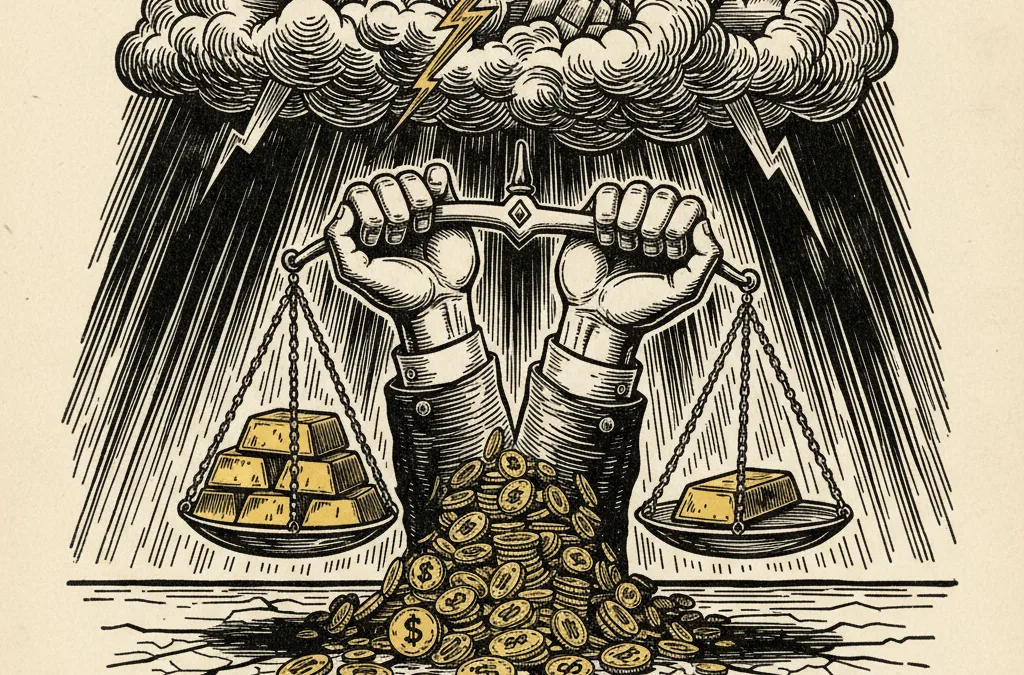
Gold Whipsaws as Iran Signals Shift From War to Diplomacy
Gold’s $1,100 monthly range tells the real story - geopolitical hedging is being built and unwound at a pace that makes traditional safe-haven logic almost irrelevant.
What to know
-
Gold slid from above $5,200 to around $4,700 in a month as mixed signals on Iran conflict resolution undercut safe-haven demand.
-
The weekly rebound of nearly 4% suggests dip-buyers are not convinced the geopolitical risk premium should be fully unwound.
-
Silver, platinum, and palladium all outpaced gold’s weekly recovery, with palladium gaining almost 7% - a sign of broader risk appetite returning.
What happened
Gold has been caught in a violent tug-of-war between geopolitical fear and diplomatic optimism. The gold price touched $5,229.70 earlier in the month before sliding sharply as the Trump administration began sending mixed signals on a potential resolution to the Iran standoff. At $4,702.70, gold sits more than 8% below that monthly high - a drawdown of over $500 per ounce that reflects how quickly safe-haven premiums can evaporate when the headline cycle shifts.
The weekly picture tells a different story. Gold has clawed back nearly $177, or 3.9%, over the past five sessions. That kind of snap-back after a steep sell-off suggests the market is far from settled on whether the Iran risk is genuinely fading or merely pausing.
Who’s involved
The White House is the primary driver here. Trump’s oscillation between hawkish posturing and hints at diplomatic engagement with Tehran has created a policy signal that is almost impossible for markets to price cleanly. One day the rhetoric points towards military escalation; the next, back-channel talks appear to be progressing.
Central banks remain significant background buyers. The structural bid that has underpinned gold’s multi-year rally above $4,000 has not disappeared - it has simply been overshadowed by the noise of headline-driven positioning. Speculative traders, meanwhile, appear to be running shorter-duration trades, riding the volatility rather than committing to a directional view.
Silver is worth noting. At $73.17, it has fallen over 11% from its monthly high, underperforming gold on a relative basis. The gold-to-silver ratio at 64.3 remains compressed by historical standards, but silver’s sharper drawdown hints that industrial demand concerns - possibly tied to sanctions uncertainty - are weighing on the white metal more than pure safe-haven flows are supporting it.
Why it matters
The monthly range in gold - from $4,100.80 to $5,229.70 - is extraordinary. That $1,129 spread represents more than 20% of the lower bound. For context, gold’s entire annual range in 2023 was roughly $400. The market is pricing geopolitical risk in real time, and the speed of repositioning is creating conditions where traditional portfolio hedging strategies struggle to keep pace.
The asymmetry of the unwind is concerning. Gold shed 8% in a month on what amounts to ambiguous diplomatic signals - not a peace deal, not a ceasefire, just mixed messaging. If a genuine de-escalation materialises, the downside from here could be swift and deep. Conversely, any breakdown in talks could send gold right back towards $5,000 within days.
The broader precious metals complex is flashing a more optimistic signal. Platinum at $1,999.90 (up 6% on the week) and palladium at $1,515 (up nearly 7%) are both outperforming gold’s recovery. That pattern typically reflects improving risk appetite and industrial demand expectations rather than a flight to safety. If the PGMs are right, the geopolitical premium in gold has further room to deflate.
What to watch
Any concrete diplomatic developments between Washington and Tehran - not rhetoric, but verifiable steps such as sanctions relief discussions or third-party mediation frameworks. The market has shown it will sell gold aggressively on credible de-escalation.
The $4,500 level roughly aligns with where gold traded before the Iran premium accelerated, and it represents a clean technical support zone. A break below would suggest the market is pricing out geopolitical risk entirely.
Central bank purchasing data for Q1 2026 will clarify whether official sector buying remained strong even as prices touched $5,200. If so, that structural floor under gold becomes much harder to ignore - regardless of what happens in the Strait of Hormuz.
This article is for informational purposes only and does not constitute financial advice. Always do your own research before making investment decisions.