On this page
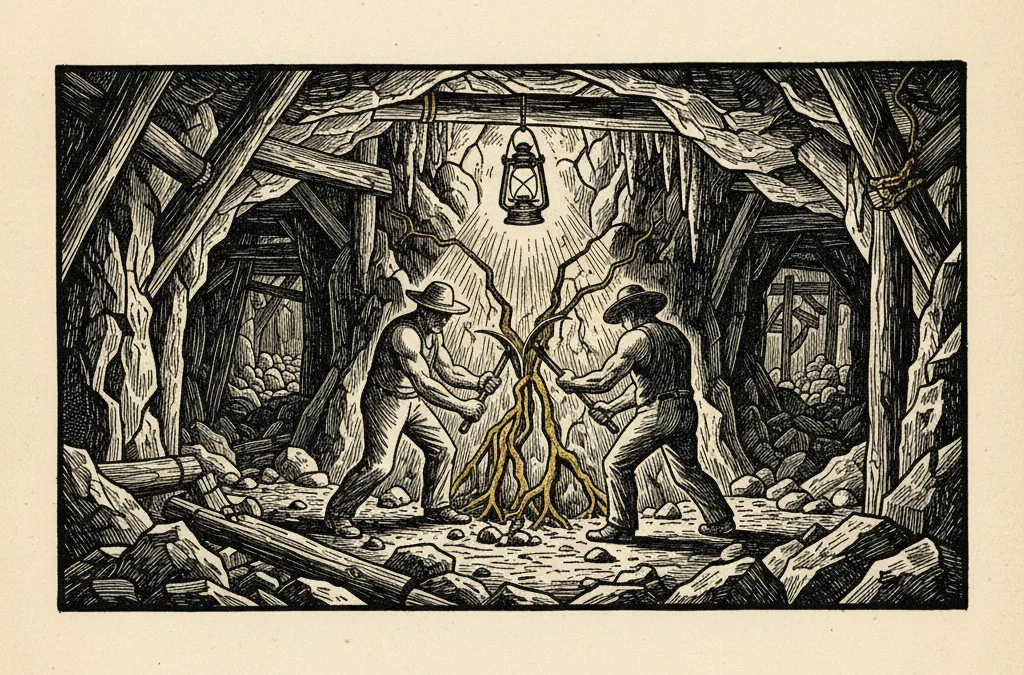
Gold Miners Look Pricey - Even With $4,800 Gold
Gold mining equities are trading at stretched valuations despite the metal sitting near $4,800 an ounce, raising the uncomfortable question of just how much good news is already baked in.
What to know
-
Gold mining stocks appear overvalued even after analysts have repeatedly raised their gold price assumptions higher throughout 2025 and into 2026.
-
Gold is currently trading at $4,817.70/oz - down 3.5% over the past month after touching $5,017.60 - yet miners have not corrected proportionally.
-
The gold-to-silver ratio sits at 60.7, suggesting broader precious metals sentiment remains skewed heavily toward gold as a safe haven rather than industrial demand.
What happened
The disconnect between gold’s price and gold miner valuations has reached a point that demands attention. Even as equity analysts have ratcheted up their long-term gold price assumptions - some now embedding figures well above $4,000/oz into their models - mining stocks still look expensive relative to fair value.
Gold itself is trading at $4,817.70/oz, off roughly 3.5% from its monthly high of $5,017.60 but still up 0.5% on the week. Margins are historically fat, balance sheets are flush, and free cash flow generation across the sector is at multi-year highs. Yet the market has already priced all of this in - and then some.
Who’s involved
The major gold producers - Newmont, Barrick, Agnico Eagle, and the mid-tier names like Kinross and Gold Fields - have all seen their share prices surge over the past 18 months as gold climbed from the $2,500 range to nearly $5,000. The GDX (VanEck Gold Miners ETF) has more than doubled from its 2024 lows, outpacing bullion itself on a percentage basis.
Institutional investors have piled in, drawn by the leverage miners offer to rising gold prices. But that leverage cuts both ways. With all-in sustaining costs across the sector averaging roughly $1,400-$1,600/oz, margins at current gold prices are extraordinary - north of $3,200 per ounce for many producers. Share prices already reflect not just today’s margins but the assumption that gold stays elevated indefinitely.
Retail investors continue to favour precious metals broadly, with gold ETF holdings remaining near record levels. The enthusiasm is palpable but increasingly untethered from valuation discipline.
Why it matters
This is a classic late-cycle dynamic in commodity equities. When analysts are forced to raise their price assumptions repeatedly and stocks still screen as expensive, it signals that the market is pricing in a permanent paradigm shift. History suggests caution.
Gold miners traded at similar valuation premiums in 2011 when bullion peaked near $1,920. The subsequent correction in mining equities was brutal - far worse than the pullback in gold itself. The GDX fell over 75% from its 2011 peak to its 2016 trough, even as gold only dropped about 45%.
Today’s setup is not identical. Central bank buying is structurally stronger, geopolitical fragmentation is more entrenched, and real interest rates remain supportive. But the valuation gap between what miners are worth on conservative assumptions and where they trade is widening, not narrowing.
The monthly decline of 3.5% in gold - from above $5,000 back to $4,817 - offers a preview of what happens when momentum stalls. Miners amplify moves in both directions, and any sustained pullback toward $4,100 (the monthly low) would expose just how much optimism is embedded in current share prices.
What to watch
The NY Empire State Manufacturing Index due today could influence near-term dollar direction, which feeds directly into gold pricing. A weak reading would likely support bullion but may not help miners if broader equity risk sentiment deteriorates simultaneously.
Three things matter now. First, the $4,800 support level in gold - a decisive break lower opens the path toward $4,500 and would pressure miners disproportionately. Second, Q1 earnings from major producers over the coming weeks will reveal whether cost inflation is eroding those headline margins. Third, the gold-to-silver ratio at 60.7 - a sharp move lower would suggest a shift from defensive positioning to risk appetite, which historically coincides with miner underperformance relative to bullion.
This article is for informational purposes only and does not constitute financial advice. Always do your own research before making investment decisions.