On this page
Gold Nears $4,800 but Wall Street Can’t Agree
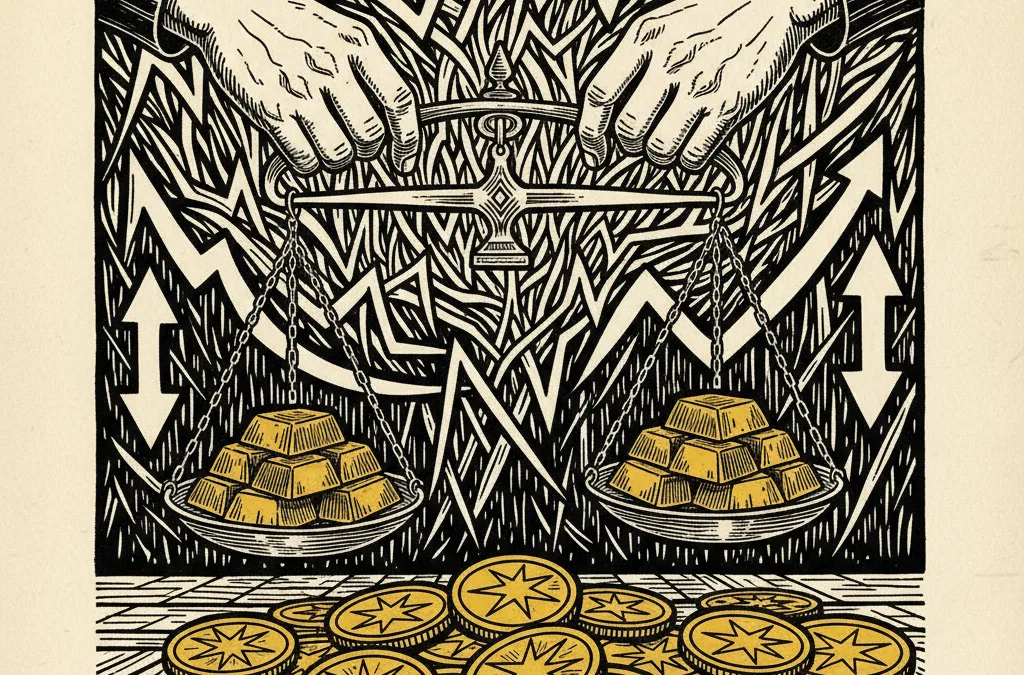
Major bank forecasts for gold in 2026 are diverging sharply, and the $1,100 trading range this month alone shows why consensus is so hard to find.
What to know
-
Gold is trading at $4,797.70/oz after a volatile month that saw prices swing between $4,100 and $5,229 - a range of over $1,100.
-
JP Morgan, ANZ, and HSBC have published notably different outlooks for gold through 2026, reflecting deep disagreement on whether the rally has further to run.
-
US CPI data due today could shift the narrative significantly, with inflation expectations a key driver of gold’s next directional move.
What happened
Gold is sitting at $4,797.70/oz today, essentially flat on the session with a marginal $1.60 gain. Over the past month, gold’s price has carved out a staggering range - from a low of $4,100.80 to a high of $5,229.70. That is a $1,128.90 swing, or roughly 22% peak-to-trough volatility in a single month.
The weekly picture is more constructive, with gold recovering 3.03% over the past five sessions. Yet the monthly change tells a different story entirely - gold remains down 8.26% from where it stood a month ago. This kind of whiplash has the major investment banks struggling to align their forecasts for the remainder of 2026.
JP Morgan, ANZ, and HSBC have each staked out distinct positions on where gold heads from here. The range of views is unusually wide, reflecting genuine uncertainty about whether the structural bull case remains intact or whether gold has overshot and needs to consolidate.
Who’s involved
The three banks represent meaningfully different analytical frameworks. JP Morgan has historically leaned bullish on gold during periods of fiscal expansion and dollar weakness. ANZ tends to anchor its commodity views more tightly to physical demand dynamics - particularly central bank purchasing and Asian consumer flows. HSBC has often been the more conservative voice, placing greater weight on real interest rates and opportunity cost arguments.
All three are grappling with the same set of contradictions. Central bank buying remains elevated globally. Geopolitical risk premia show no sign of fading. Yet real yields in the US are still positive, and the dollar - while weakened from its 2024 peaks - has not collapsed in the way that would typically underpin a move toward $5,000.
The gold-silver ratio at 62.9 suggests silver is keeping pace reasonably well, up 5% on the week. Platinum’s 5.49% weekly gain and palladium’s 3.95% rise indicate broader precious metals strength, not a gold-specific phenomenon.
Why it matters
When major banks diverge this sharply on a single asset, the market is typically at an inflection point rather than mid-trend. The last time we saw comparable forecast dispersion was in late 2023, when gold was trading around $2,000 and opinions ranged from $1,800 to $2,500. Gold ultimately broke higher - but not before a painful consolidation that shook out leveraged longs.
Gold’s 8.26% monthly decline from what were likely record or near-record levels suggests profit-taking and position adjustment are well underway. The question is whether the dip to $4,100 represents a floor or merely a pause before deeper retracement.
Volatility itself has become a defining feature of this market. A $1,100 monthly range on gold would have been unthinkable even two years ago. It reflects both the asset’s growing role as a macro hedge and the sheer volume of speculative capital now flowing through precious metals markets.
What to watch
Today’s US CPI release is the immediate catalyst. A hotter-than-expected print would complicate the rate-cut narrative that has supported gold, potentially triggering another leg lower. A soft reading could reignite momentum toward $5,000.
Beyond the data, three things matter. First, whether gold can hold above $4,750 on a weekly closing basis - that level has acted as a pivot through recent sessions. Second, the pace of central bank gold purchases in Q2 data, which will start filtering through in the coming weeks. Third, the ECB’s tone - with Guindos speaking today - on European monetary policy direction, which influences the euro-dollar cross and, by extension, dollar-denominated gold price dynamics.
The analyst divergence is itself a signal. When the street cannot agree, the market tends to resolve the uncertainty with a sharp directional move - though which direction remains unclear.
This article is for informational purposes only and does not constitute financial advice. Always do your own research before making investment decisions.