On this page

Silver Outpaces Gold as Dollar Slide Reshapes the Trade
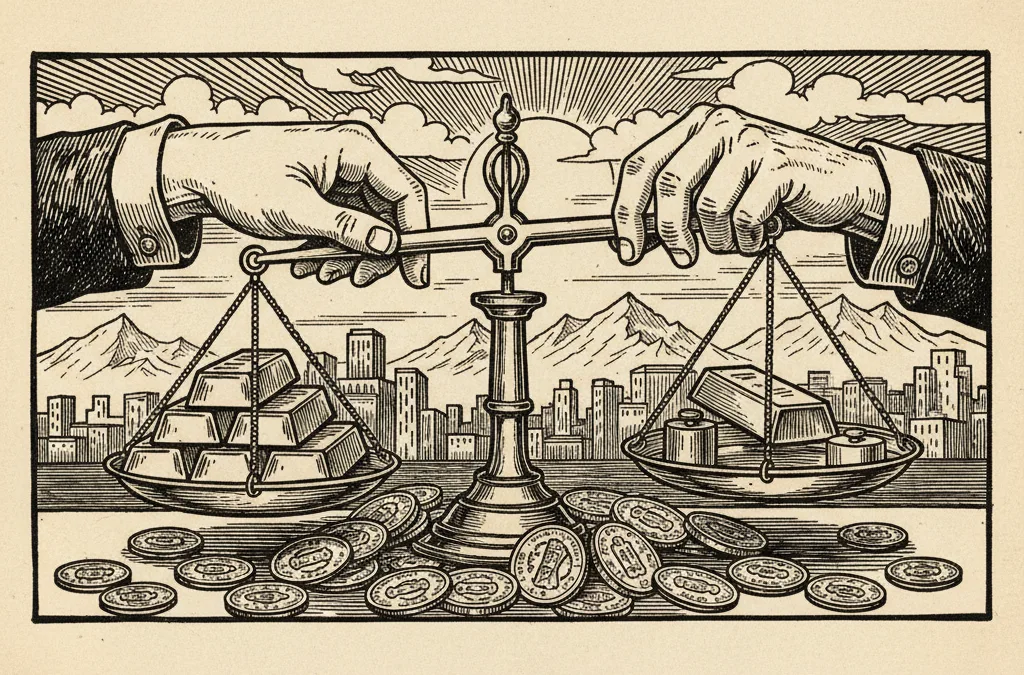
Silver’s 8% weekly surge is dwarfing gold’s gains, compressing the gold/silver ratio to 58.5 - a level that historically signals a broader metals rally is gathering momentum.
What to know
-
Silver has climbed 8.27% this week to $89.47/oz, outpacing gold’s 2.28% weekly gain, pushing the gold/silver ratio down to 58.5.
-
Gold is holding near $5,237/oz after touching a wide intraday range of $5,127–$5,249, with month-to-date gains of 4.66%.
-
Easing US-Iran tensions and persistent US dollar weakness are driving flows into precious metals across international and Indian MCX markets.
What happened
Precious metals surged across the board this week, led by silver’s 8.27% climb to $89.47/oz - nearly four times gold’s 2.28% weekly gain to $5,237/oz. That divergence has compressed the gold/silver ratio to 58.5, well below the 65–70 range that dominated for much of the past year.
A weakening US dollar - pressured by softening economic expectations - has made dollar-denominated metals cheaper for international buyers. Diplomatic signals suggesting a de-escalation in US-Iran tensions have shifted the market’s risk calculus, unlocking industrial and speculative flows into silver and platinum group metals rather than dampening safe-haven demand.
On India’s MCX exchange, gold futures jumped ₹1,600 in a single session while silver surged roughly 3%. India remains one of the world’s largest physical markets, and when MCX prices move this decisively, it tends to pull through additional retail and jewellery demand.
Who’s involved
The greenback’s slide has been the primary accelerant. With US employment data due this week - including the ADP Employment Change - currency traders are positioning for further softness. Any downside surprise in jobs numbers could extend the dollar’s losses.
Silver’s outperformance suggests industrial buyers and momentum-driven funds are piling in alongside traditional precious metals allocators. Platinum at $2,231.60/oz (+3.57% on the week) and palladium at $1,699.50/oz (+1.90%) confirm this isn’t purely safe-haven buying - it’s a broad metals bid with an industrial flavour.
Indian market participants are drawing in domestic investors who have watched gold climb nearly 5% this month. When rupee weakness compounds dollar-denominated gains, Indian gold demand tends to accelerate rather than retreat - a pattern that has held consistently since 2023.
Why it matters
The gold/silver ratio at 58.5 deserves close attention. When this ratio drops below 60, it has often preceded extended precious metals bull runs - notably in 2011 and again briefly in 2020. Silver’s tendency to outperform gold during later rally stages reflects growing confidence the move has legs.
Gold’s monthly range of $4,848–$5,405 represents over 10% volatility within a single month - unusually wide for a market this mature. It suggests conviction is building on both sides, but the trend remains decisively upward, with gold adding $233 month-to-date.
Easing US-Iran tensions might logically reduce gold’s risk premium, yet prices are holding firm. That resilience points to structural demand - central bank buying, de-dollarisation flows, and portfolio rebalancing - underpinning the market well beyond any single geopolitical headline.
What to watch
This week’s US economic data is the immediate trigger point. The ADP Employment Change and Existing Home Sales releases could either reinforce or challenge the dollar weakness thesis. Soft readings would likely push gold toward a retest of the $5,405 monthly high; stronger data could trigger a pullback toward $5,130 support.
The gold/silver ratio warrants monitoring. A sustained break below 58 would signal silver is entering a momentum phase that could carry it toward $95 - a level last tested during the 2011 commodity supercycle in inflation-adjusted terms.
Indian import data remains the unresolved variable: if MCX premiums hold or widen, physical demand is absorbing the rally rather than retreating from it.
This article is for informational purposes only and does not constitute financial advice. Always do your own research before making investment decisions.