On this page
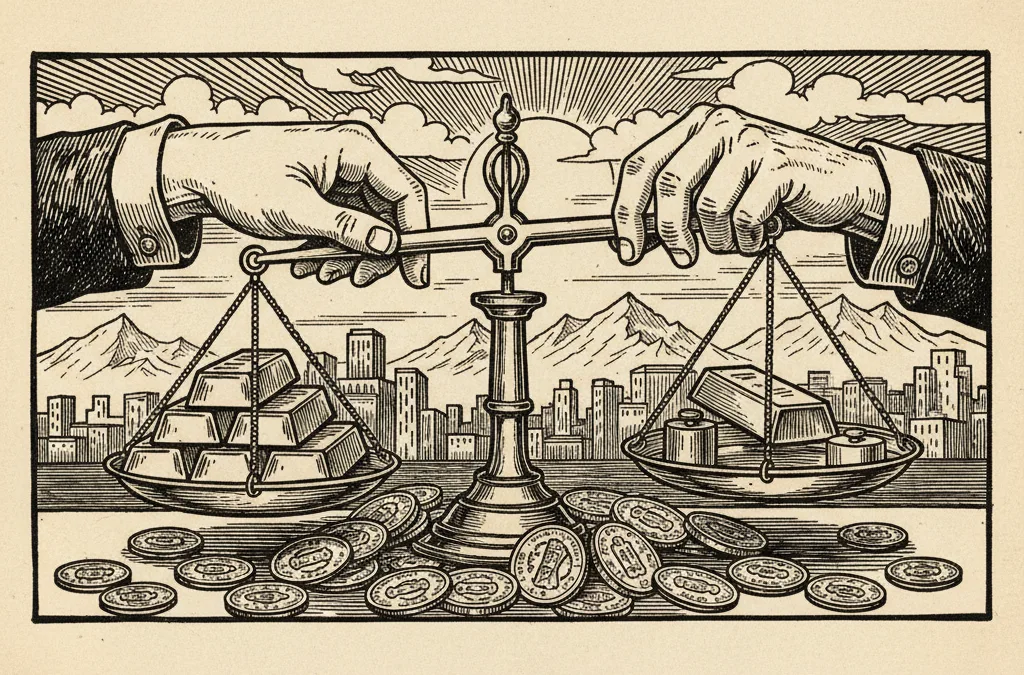
Gold Drops Below $5,100 Even as Oil Tops $100
Gold’s pullback from recent highs despite escalating US-Iran tensions and triple-digit oil prices suggests the market is pricing in something beyond the geopolitical headline.
What to know
-
Gold has slipped 0.59% on the week to $5,061.70/oz despite rising US-Iran tensions and oil prices above $100 per barrel.
-
The metal traded in a wide $118 intraday range on 14 March, touching as low as $5,014 before recovering - a sign of significant two-way positioning.
-
Silver and platinum are falling harder than gold on the week, down 3.20% and 5.88% respectively, pointing to broader precious metals softness rather than a gold-specific story.
What happened
With US-Iran tensions elevated and crude oil sustaining levels above $100 per barrel, the gold price has retreated rather than rallied. At $5,061.70/oz, gold is down nearly 0.6% on the week and has pulled back sharply from its monthly high of $5,405.00 - a decline of more than $340 from peak to current levels.
Friday’s session was volatile. Gold swung through a $118 range between $5,014 and $5,132, eventually settling near the lower end. That kind of intraday whipsaw typically reflects institutional repositioning rather than retail panic. Gold remains up 3.66% on the month, so this is a correction within a broader uptrend - not a reversal, at least not yet.
Who’s involved
Safe-haven flows that would normally push gold higher in a US-Iran escalation are being offset by forces pulling capital elsewhere. Real yields have likely firmed on expectations that elevated oil prices will keep central banks hawkish for longer, making non-yielding gold relatively less attractive.
Speculative positioning in gold futures has been stretched long for weeks. When a market is already heavily positioned for upside, even a textbook bullish catalyst - like military tensions in the Gulf - can trigger profit-taking rather than fresh buying. The same pattern played out in early 2020 when gold initially sold off after the Soleimani strike before rallying weeks later.
Silver tells a similar story but with more industrial drag. Down 3.20% on the week to $81.34/oz, silver’s sharper decline reflects its dual identity - part safe haven, part industrial metal. The gold-silver ratio sitting at 62.2 is relatively compressed by historical standards, suggesting silver may have further to fall if risk appetite deteriorates.
Platinum and palladium are faring even worse, down 5.88% and 4.96% on the week respectively. The breadth of selling across the precious metals complex suggests this is not simply a gold story but a broader reallocation.
Why it matters
The inflationary impulse from $100-plus oil is being read as a constraint on monetary easing rather than a pure risk-off signal. If central banks are forced to hold rates higher or even tighten further to combat energy-driven inflation, gold faces a headwind that geopolitical fear alone cannot overcome.
During the 2022 Russia-Ukraine escalation, gold spiked initially but then spent months grinding lower as the Federal Reserve embarked on aggressive rate hikes partly driven by energy costs. Elevated energy prices feeding into sticky inflation expectations that delay rate cuts - this is similar to the early phase of that conflict.
The $340 pullback from the $5,405 monthly high also raises a technical question. Gold has been on a remarkable run in 2026, and corrections of 5-7% within secular bull markets are healthy. The $5,000 level is now the psychological floor to watch.
What to watch
Whether gold can hold the $5,000 level on a closing basis - a decisive break below would shift the technical picture and likely trigger algorithmic selling. The trajectory of US real yields, which remain the single most reliable driver of gold over medium-term horizons. If oil above $100 forces the Fed into more hawkish rhetoric, gold could face further pressure.
The actual escalation path between the US and Iran matters most. Markets have a tendency to price in geopolitical risk quickly and then fade it unless the situation materially worsens. A direct military confrontation involving shipping lanes would be a different order of magnitude from sabre-rattling.
This article is for informational purposes only and does not constitute financial advice. Always do your own research before making investment decisions.