On this page

Silver Drops 14% While Gold Holds - A Ratio Reset
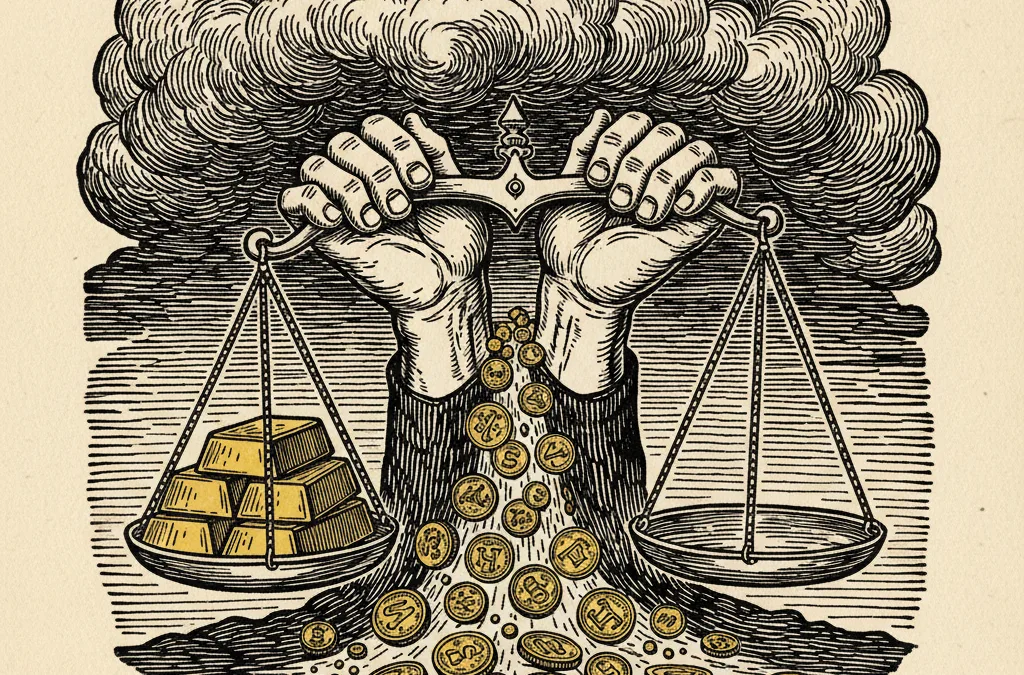
Silver’s sharp sell-off has outpaced gold’s decline by a factor of two, compressing the gold-silver ratio to 65.7 and exposing just how fragile speculative positioning in the white metal had become.
What to know
-
Silver has fallen roughly 14% while gold has dropped approximately 7%, with silver bearing the brunt of a broader precious metals rout driven by persistent inflation and steady interest rate expectations.
-
The gold-silver ratio now sits at 65.7, suggesting silver’s recent outperformance has been sharply unwound as risk appetite fades.
-
Central bank rate decisions from the BoJ, SNB, and BoE - all landing this week - are adding to volatility as markets reprice the path of global monetary policy.
What happened
Precious metals have taken a significant hit this week, but the damage has not been evenly distributed. Silver has tumbled roughly 14%, a move that dwarfs gold’s 7% decline and signals a classic risk-off rotation within the metals complex. Gold currently trades around $4,587 per ounce, while silver sits near $69.86 - levels that, while still elevated by historical standards, represent a painful drawdown for anyone who entered positions in recent weeks.
The catalyst is familiar: stubborn inflation data paired with central banks showing no urgency to cut rates. Markets had been pricing in easing that simply has not materialised, and the repricing is hitting leveraged and speculative assets hardest. Silver, with its dual identity as both a precious and industrial metal, is absorbing selling pressure from both directions.
Who’s involved
The week has been dominated by central bank activity. The Bank of Japan’s rate decision landed today alongside the Swiss National Bank and the Bank of England - a rare clustering of high-impact monetary policy events. None of these institutions appear inclined to ease aggressively, and the collective message reinforces the higher-for-longer narrative that has been building since the start of the year.
Speculative traders in silver futures are the most exposed cohort. Net long positioning had swelled over recent months as silver rode the tailwinds of industrial demand narratives - particularly around solar and electrification. That crowded trade is now unwinding rapidly. Gold, by contrast, continues to benefit from central bank reserve buying, which provides a structural floor that silver simply lacks.
Retail investors tracking gold price movements will note that even at $4,587, gold remains within a broader uptrend that has defined the past 18 months. Silver’s decline is more structurally significant - a 14% drop in a matter of days suggests genuine liquidation rather than orderly profit-taking.
Why it matters
The gold-silver ratio at 65.7 tells a revealing story. Earlier this year, that ratio had compressed as silver outperformed, leading many to call a new silver bull cycle. The speed of the reversal challenges that thesis. When silver sells off twice as hard as gold, it reflects tightening financial conditions and deteriorating risk appetite - not just a metals-specific event.
In late 2022, silver experienced a similar sharp correction after an extended rally, dropping over 10% in under two weeks before stabilising. The recovery took months, not days. If this episode follows a comparable pattern, silver may need to find a new base before any meaningful rebound.
The macro backdrop compounds the challenge. US initial jobless claims data, also due this week, will offer a real-time read on labour market resilience. A strong number would further diminish rate cut expectations and keep pressure on non-yielding assets. UK employment data carries similar weight for sterling-denominated metals, where the BoE’s decision today adds another layer of uncertainty.
What to watch
The gold-silver ratio: if it pushes back above 70, it would confirm that silver’s relative weakness is deepening rather than stabilising. US jobless claims - any surprise to the downside (stronger labour market) could trigger another leg lower in metals. The $65-$67 zone in silver represented consolidation support earlier this quarter, and a break below it would open the door to a more extended correction toward $60.
Gold’s ability to hold above $4,500 is equally critical. That level has acted as a psychological and technical anchor, and a breach would shift the conversation from healthy pullback to something more concerning. The structural case for gold remains intact, but how silver behaves around $65 will determine whether this is a reset or the start of a deeper unwind.
This article is for informational purposes only and does not constitute financial advice. Always do your own research before making investment decisions.