On this page
Gold’s Bubble Question Returns - But at $4,785
India’s central bank has flagged gold’s 142% surge since 2023 as consistent with bubble-like behaviour, raising uncomfortable questions even as the metal trades near $4,800 and central bank buying shows no sign of slowing.
What to know
-
Gold has surged roughly 142% since early 2023, with the Reserve Bank of India now characterising the move as exhibiting bubble-like traits.
-
The metal currently trades at $4,784.60/oz - down 8.5% from its monthly high near $5,230 but still up 2.7% on the week.
-
US CPI data due imminently could reshape the near-term trajectory, with inflation prints directly influencing Fed rate expectations and dollar strength.
What happened
The Reserve Bank of India has characterised gold’s 142% price surge since 2023 as consistent with bubble-like behaviour - a rare and pointed intervention from a major central bank that lands at a moment of significant volatility.
The gold price currently sits at $4,784.60/oz, having pulled back sharply from its monthly peak near $5,230. That 8.5% drawdown over the past month is notable, but it sits within a broader context of relentless appreciation. Gold has more than doubled in under three years, a pace that dwarfs any comparable run since the post-GFC rally of 2009-2011.
Even this week, the metal has clawed back 2.7%, trading in a range between $4,753 and $4,820. The day’s price action was flat - a rare pause that feels more like consolidation than exhaustion.
Who’s involved
The RBI’s commentary matters because India is one of the world’s largest gold consumers and holders. The central bank itself has been a consistent buyer in recent years, adding to reserves as part of a broader diversification away from dollar-denominated assets. For the RBI to flag bubble risk in an asset it actively accumulates sends a conflicting signal.
Global central banks remain net buyers. The People’s Bank of China, the National Bank of Poland, and several Gulf state monetary authorities have all been building gold reserves at a pace not seen since the 1960s. This structural demand has been one of the primary pillars underpinning the rally.
On the other side, speculative positioning in futures markets has grown stretched. Managed money longs have built up substantially, and the monthly drawdown from $5,230 suggests some of that froth is being worked off. Retail demand in India itself has cooled as domestic prices - amplified by rupee weakness - have pushed gold beyond the reach of many traditional buyers.
Why it matters
The bubble label is loaded, and the RBI’s use of it deserves scrutiny rather than dismissal. A 142% move in roughly 30 months is historically unusual for gold, which typically grinds higher during inflationary or geopolitical stress rather than surging vertically. The 2009-2011 rally, which took gold from around $850 to $1,920, represented a similar magnitude move but unfolded over a longer timeframe and ended with a painful multi-year correction.
The structural backdrop today is arguably different. Central bank buying is not speculative - it reflects a geopolitical reordering of reserve management. De-dollarisation trends, persistent fiscal deficits across major economies, and elevated geopolitical risk from multiple theatres provide fundamental support that the 2011 peak lacked.
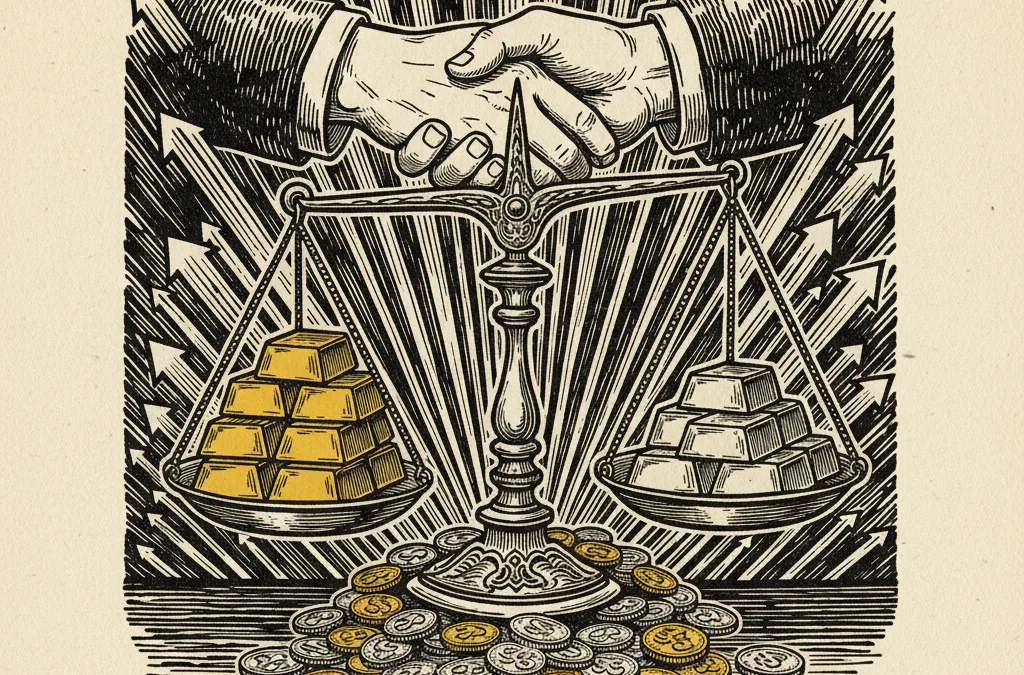
The gold-silver ratio at 62.6 suggests silver has been outperforming on a relative basis recently - silver gained 5.2% this week versus gold’s 2.7%. That kind of catch-up trade often signals risk appetite returning to the broader metals complex rather than a pure safe-haven bid driving gold alone.
The 8.5% monthly pullback is a healthy correction within a secular bull trend. Bubbles do not typically correct and stabilise - they accelerate into parabolic tops. Gold’s current consolidation around $4,800 looks more like a market digesting gains than one about to implode.
What to watch
US CPI data due today is the immediate catalyst. A hot print would strengthen the dollar and pressure gold in the short term, but paradoxically reinforce the longer-term inflation hedge narrative. A softer reading could reignite the push toward $5,000.
Beyond that, three things matter. First, whether other central banks echo the RBI’s bubble warning - if the PBoC or Fed officials adopt similar language, sentiment could shift meaningfully. Second, the $4,750 support level - a break below would open the door to a deeper correction toward the $4,100 monthly low. Third, Indian physical demand data through the wedding season. If domestic buyers remain sidelined at these prices, one of gold’s most reliable demand pillars weakens.
The RBI has raised the question. The market has not yet answered it.
This article is for informational purposes only and does not constitute financial advice. Always do your own research before making investment decisions.