On this page
Gold Rallies on US-Iran Ceasefire - But the Dip Isn’t Over
Gold surged past $4,800 as a US-Iran ceasefire reshuffled geopolitical risk premiums, yet the metal remains more than 8% below its March highs - raising the question of whether this bounce has legs.
What to know
-
Gold touched $4,888 intraday on 8 April before settling near $4,815, gaining 3.5% on the week but still down 5.4% on the month.
-
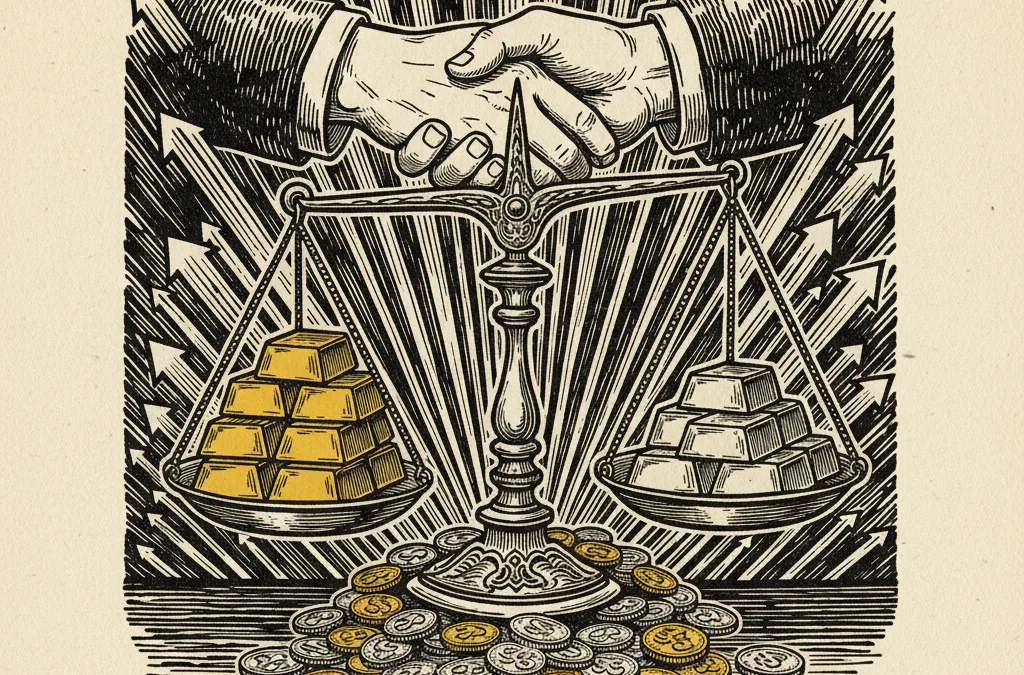
Silver outpaced gold with a 5.6% weekly gain to $76.83, compressing the gold/silver ratio to 62.7.
-
FOMC minutes due later today could reset expectations on rate cuts and determine whether this rally extends.
What happened
Gold ripped higher in early April trading, touching $4,888 per ounce before easing back to around $4,815 - a weekly gain of 3.5%. The catalyst was a ceasefire agreement between the US and Iran, which at first glance seems counterintuitive. Geopolitical de-escalation typically drains safe-haven demand. But the dynamics here are more nuanced.
The ceasefire has introduced a fresh layer of uncertainty rather than removing it. Markets are pricing in the possibility that a diplomatic thaw could unravel quickly, and traders appear reluctant to shed gold positions until the agreement proves durable. Indian markets reflected the enthusiasm, with MCX gold futures pushing above ₹1.54 lakh per 10 grams.
Silver followed with even greater vigour. At $76.83 per ounce, it posted a 5.6% weekly gain - outpacing gold and pulling the gold/silver ratio down to 62.7. That ratio has been compressing steadily, suggesting industrial demand narratives are reinforcing silver’s safe-haven bid.
Who’s involved
Central banks remain the structural buyers underpinning this market. The pattern of sovereign accumulation that defined 2024 and 2025 has not abated, and any dip towards the $4,100-$4,200 range - the monthly low sits at $4,100.80 - has been met with institutional buying.
Indian retail demand is also a factor. Gold at ₹1.54 lakh per 10 grams is historically elevated, yet Indian consumers have shown a willingness to buy at these levels, particularly ahead of wedding season. MCX volumes have been robust, and the domestic premium over international prices suggests genuine physical demand rather than purely speculative flows.
On the other side, short-term momentum traders are navigating a tricky range. The $4,740-$4,888 daily band on 8 April was unusually wide - nearly $150 - signalling that conviction is thin and positioning is reactive.
Why it matters
Gold is still down 5.4% from its month-ago level and more than 8% off the $5,229.70 peak hit in March. This rally is happening within a corrective phase, not a breakout. The question is whether the ceasefire-driven bid can stabilise the gold price above $4,800 or whether it fades once the headline catalyst loses freshness.
Historically, geopolitical ceasefires produce short-lived precious metals rallies unless they coincide with supportive macro conditions. The current setup is mixed. Palladium’s 8.6% weekly surge and platinum’s 6.2% gain suggest broad-based metals strength, not just a gold-specific story. That points to dollar weakness or liquidity expectations as the deeper driver.
The month-on-month declines across both gold (-5.4%) and silver (-8.6%) indicate that the March correction was severe. A relief rally was overdue regardless of the geopolitical trigger.
What to watch
The FOMC minutes releasing later today are the immediate risk event. Any signal that the Fed is reconsidering the pace of rate cuts could pull the rug from under this rally. Conversely, dovish language would give gold a second catalyst to build on.
Beyond today, three things matter. First, whether gold can hold above $4,740 on a closing basis - that is the week’s support level and a break below would suggest the corrective phase has further to run. Second, the gold/silver ratio at 62.7 is approaching levels that historically precede silver outperformance; a move below 60 would be a significant signal. Third, the durability of the US-Iran ceasefire itself. Geopolitical risk premiums can evaporate overnight, and any breakdown in negotiations would likely send gold sharply higher while simultaneously testing whether silver’s industrial demand story holds up under renewed uncertainty.
This article is for informational purposes only and does not constitute financial advice. Always do your own research before making investment decisions.