On this page
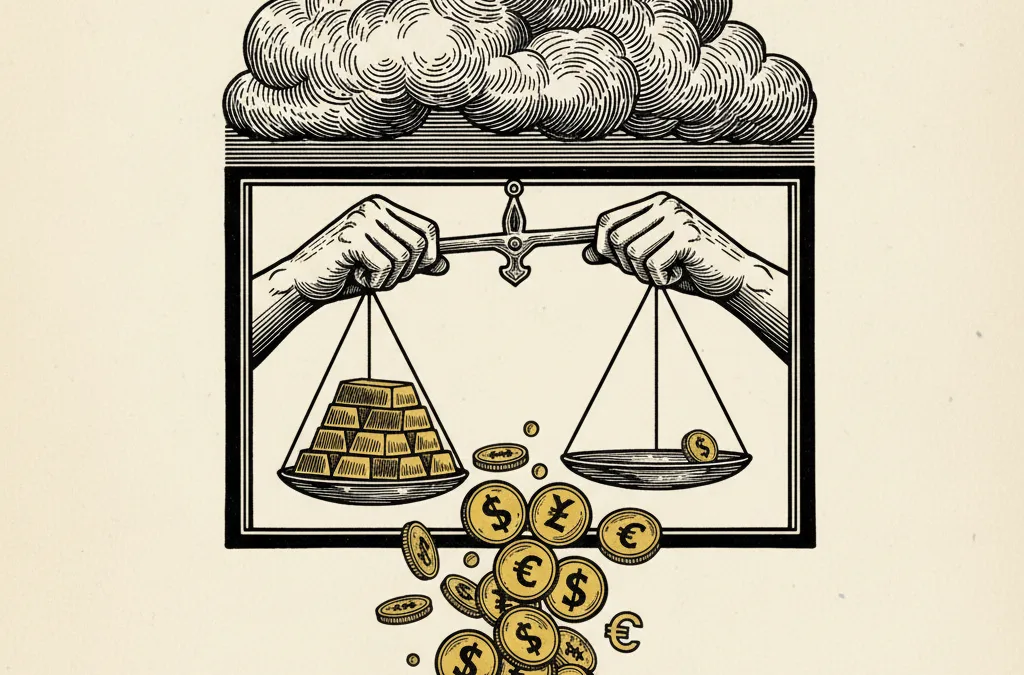
Gold Wobbles Below $5,000 as Fed Doubt Creeps Back
Gold’s brief dip beneath the $5,000 level signals that the market’s confidence in imminent Fed rate cuts is fraying - and the next week of data could determine whether bulls or bears take control.
What to know
-
Gold briefly traded below $5,000/oz before recovering to around $5,033, with lingering uncertainty over Federal Reserve policy weighing on sentiment.
-
The FOMC’s reluctance to commit to a clear easing timeline is keeping real yields elevated, capping gold’s upside despite strong underlying demand.
-
A packed economic calendar this week - including US manufacturing data and Chinese industrial figures - could shift the narrative sharply in either direction.
What happened
Gold slipped below the psychologically significant $5,000/oz mark during early trading on 16 March before clawing back to around $5,033 - a level that suggests buyers are still willing to step in on dips, but without much conviction. The move lower reflects a broader mood shift in precious metals, where the euphoria of gold’s historic run above $5,000 is giving way to a more cautious reassessment of the macro backdrop.
The gold price has been trading in an unusually tight range recently, with the day’s spread barely registering any movement. That kind of compression often precedes a sharp directional break. Silver is holding at $81.31/oz with a gold-silver ratio of 61.9, which remains historically compressed compared to the 80-plus readings common just two years ago - a sign that industrial metals demand is still providing a floor for the broader complex.
Who’s involved
The Federal Reserve is the dominant force here. The FOMC’s most recent communications have left markets guessing about the timing and pace of any further rate adjustments. Fed funds futures have been repricing steadily over the past fortnight, with traders pulling back expectations for near-term cuts. That recalibration is directly pressuring gold by keeping real yields attractive relative to a non-yielding asset.
Central bank buyers - particularly in Asia - remain a structural pillar of demand. But even institutional accumulation has its limits when the short-term macro picture turns ambiguous. Speculative positioning appears to have thinned, with momentum traders likely reducing exposure after gold failed to hold above $5,100 earlier this month.
On the other side, physical demand from retail investors and jewellery markets has softened at these elevated price levels. The $5,000 threshold is not just a round number for traders - it represents a genuine affordability barrier for consumers in key markets like India and China.
Why it matters
Gold’s relationship with the $5,000 level is becoming a litmus test for the entire precious metals narrative. The metal’s extraordinary rally from sub-$2,000 levels in 2023 to five-figure territory has been driven by a confluence of central bank buying, geopolitical hedging, and expectations of monetary easing. Strip away the easing expectations, and the question becomes whether the other pillars are strong enough to hold the floor.
History offers a useful parallel. When gold first breached $1,000 in 2008, it pulled back below that level multiple times before establishing it as firm support. The same pattern played out at $2,000 in 2020-2023. These psychological thresholds tend to act as battlegrounds before becoming launchpads - but only if the fundamental case remains intact.
The risk here is that the Fed maintains its hawkish ambiguity for longer than the market can tolerate. Platinum at $2,110 and palladium at $1,608 are both showing similar hesitancy, suggesting this is not a gold-specific story but a broader precious metals repricing tied to rate expectations.
What happens next
This week’s economic calendar is unusually dense. The US NY Empire State Manufacturing Index, due today, will offer an early read on whether the American industrial economy is cooling enough to justify rate cuts. Weak data would be bullish for gold; a surprise to the upside could push it back below $5,000.
Chinese retail sales and industrial production figures, also releasing today, matter enormously. China’s physical gold demand has been a key price driver, and any signs of economic softening there could cut both ways - dampening consumer demand while boosting safe-haven flows.
Canadian inflation data rounds out the picture. While not directly tied to Fed policy, it provides a read on the broader disinflationary trend across developed economies.
The $4,950 level is critical support. A sustained break below that would suggest the $5,000 era is not yet fully established, and a retest of $4,700-$4,800 becomes plausible.
This article is for informational purposes only and does not constitute financial advice. Always do your own research before making investment decisions.