On this page
Gold Nears $4,900 as Iran Talks and Fed Hopes Collide
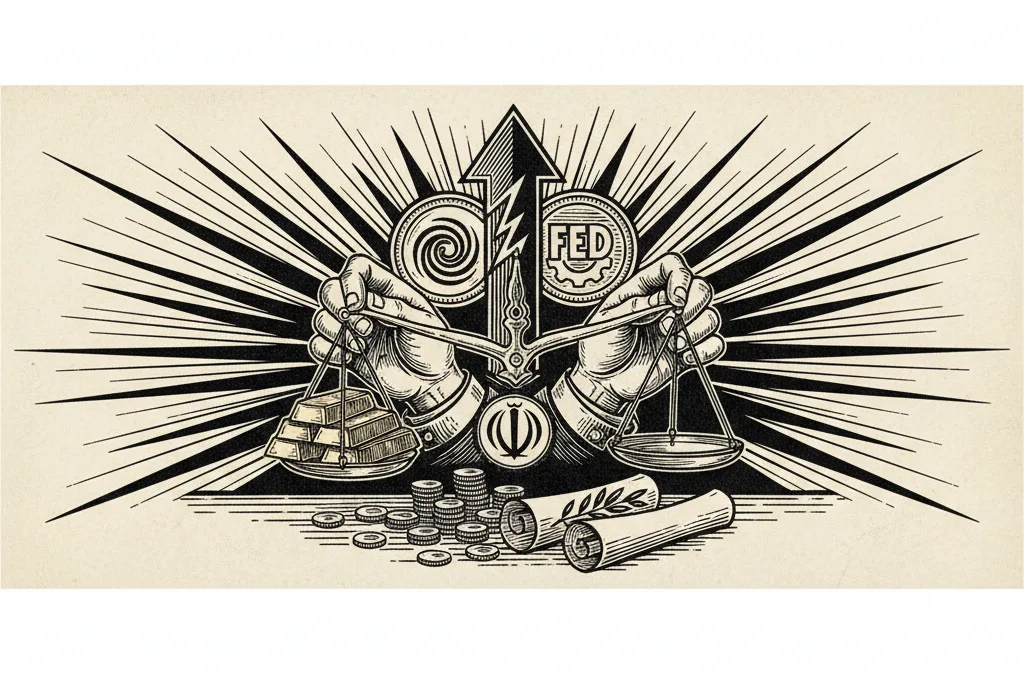
Gold is trading just below $4,900 with two powerful tailwinds converging - diplomatic uncertainty over US-Iran negotiations and growing expectations of a Federal Reserve policy pivot - creating a setup that could push bullion into uncharted territory.
What to know
-
Gold is currently trading at $4,879.60/oz, up nearly 3% on the week and within striking distance of its monthly high of $4,949.60.
-
US-Iran diplomatic developments are injecting fresh geopolitical risk premium into bullion, while markets increasingly price in a dovish Fed shift.
-
Silver is outperforming gold sharply, gaining over 8% on the week and compressing the gold/silver ratio to 59.6 - a level that historically signals broad precious metals momentum.
What happened
Gold is holding firm at $4,879.60/oz after a week of steady accumulation that has added $137 - or nearly 3% - to the gold price. The move brings bullion within touching distance of its April high near $4,950, a level tested earlier this month before a brief pullback.
The rally is running on two engines. Diplomatic signals around a potential US-Iran agreement have introduced a classic geopolitical uncertainty trade. Markets are not pricing in a deal - they are pricing in the risk that talks collapse. Federal Reserve communications have shifted perceptibly dovish, with futures markets now reflecting heightened expectations of rate action in the coming months. FOMC statements have increasingly acknowledged downside risks to growth, and that language shift has not gone unnoticed by gold buyers.
The monthly picture is essentially flat - gold is down just 0.2% over 30 days - but that masks significant volatility. The $4,100 to $4,950 range this month represents nearly a 20% swing from trough to peak, suggesting conviction is building at these elevated levels rather than fading.
Who’s involved
Central banks remain the structural backbone of gold demand. Sovereign buying has been a persistent feature of this market for over two years now, and there is little sign of that changing. The geopolitical backdrop - with US-Iran negotiations adding to existing tensions globally - only reinforces the reserve diversification thesis.
Institutional investors appear to be rotating back into precious metals as a macro hedge. The simultaneous strength across the complex is telling. Silver at $81.84 is up over 8% on the week, dramatically outpacing gold. Platinum has added nearly 4% to reach $2,141.70, while even palladium - often the laggard - has gained 2%.
The gold/silver ratio sitting at 59.6 deserves attention. This is well below the long-term average and historically has coincided with periods where broad precious metals momentum accelerates rather than stalls. When silver leads, it typically signals risk appetite within the metals complex is expanding.
Why it matters
The convergence of geopolitical risk and monetary policy expectations is the most potent combination for gold. Each driver alone can sustain a rally. Together, they create a feedback loop where safe-haven demand meets falling real yield expectations, and both point in the same direction.
Consider the context. Gold has roughly doubled from levels seen just two years ago. The pace of appreciation has been extraordinary, yet the macro environment continues to provide fresh catalysts. US-Iran negotiations represent a binary risk event - either a deal materialises and removes some geopolitical premium, or talks break down and the Middle East risk landscape deteriorates further. Gold wins in the latter scenario and holds steady in the former, given the Fed backdrop.
The breadth of the precious metals rally also matters. When gold moves alone, it can reflect narrow safe-haven flows. When the entire complex moves - as it is now - it suggests a more fundamental repricing of real assets relative to fiat currencies and fixed income.
What happens next
The $4,950 level is the immediate technical threshold. A clean break above would put $5,000 in play - a psychologically significant milestone that could trigger momentum-driven buying.
Any concrete developments in US-Iran talks will be the near-term catalyst. A breakdown in negotiations would likely accelerate gold’s move higher, while a credible framework agreement could trigger a brief pullback - though likely a shallow one given underlying demand. Fed communications over the coming weeks will be critical - watch for any shifts in the dot plot expectations or language around the balance of risks, as the gold market is pricing in dovish action and any hawkish pushback could test the $4,800 support level.
This article is for informational purposes only and does not constitute financial advice. Always do your own research before making investment decisions.