On this page

Gold Tops $4,800 but Fades From Highs - Iran Talks Key
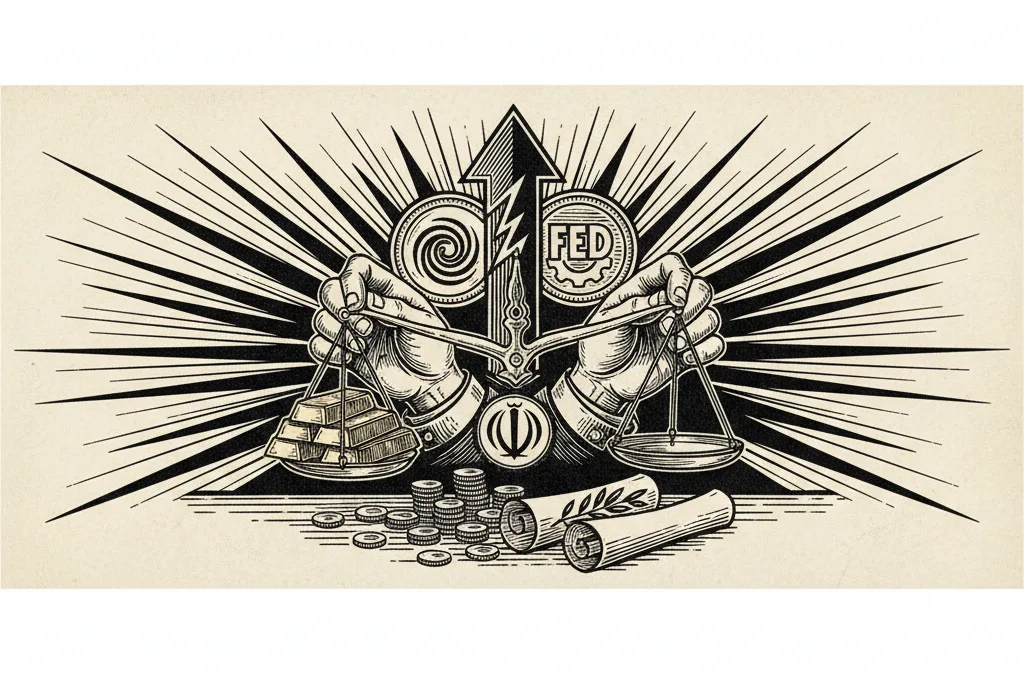
Gold pushed above $4,800 on dollar softness and US-Iran diplomatic uncertainty, but a sharp intraday reversal from near $4,900 suggests the market is struggling to find conviction at these levels.
What to know
-
Gold traded in an unusually wide $87 intraday range on 15 April, touching $4,895 before settling back near $4,814 - a move that hints at profit-taking above the $4,850 zone.
-
The US dollar weakened as markets digested renewed US-Iran diplomatic signals, removing a headwind that had capped gold for much of the past month.
-
Despite the daily bounce, gold remains down 3.6% over the past month from its $5,017 high, leaving the metal in a corrective phase even as geopolitical risk premiums rebuild.
What happened
Gold surged 1.5% during the European session on 15 April, briefly piercing the $4,895 level before sellers stepped in aggressively. By the close, the gold price had settled around $4,814 - still comfortably above the $4,800 handle but well off the day’s peak. That $87 intraday range reflects competing forces: genuine safe-haven demand meeting supply from traders who remember the sharp rejection at $5,017 just weeks ago.
The catalyst was twofold. Fresh signals around US-Iran negotiations injected geopolitical anxiety into a market that had been drifting lower through early April. Simultaneously, the dollar softened, giving gold room to breathe after weeks of pressure. The NY Empire State Manufacturing Index release - a high-impact data point - added to the macro noise, with markets parsing every indicator for clues on the Federal Reserve’s next move.
Silver outperformed on the day, consistent with its stronger weekly gain of 3.7% versus gold’s 0.45%. The gold-silver ratio sitting at 60.9 reflects that relative silver strength, down from levels above 62 seen earlier this month.
Who’s involved
Central bank buying continues to underpin the structural bid beneath gold. The pattern of sovereign accumulation that has defined this cycle shows no signs of slowing, and dips toward the $4,100-$4,200 zone - the monthly low sits at $4,101 - have been met with consistent demand.
On the other side, momentum traders appear to be running lighter positions after the pullback from $5,017. The failure to hold above $4,850 intraday suggests that leveraged longs are not yet willing to press the trade at these levels. Options market activity around the $5,000 strike remains elevated, pointing to hedging rather than outright bullish positioning.
The diplomatic dimension adds another layer. US-Iran talks have historically been a binary risk event for gold - progress toward a deal tends to deflate risk premiums, while breakdowns amplify them. The market is pricing in uncertainty rather than a specific outcome, which typically keeps a floor beneath prices.
Why it matters
Gold rallied roughly 17% from its monthly low of $4,101 to its $5,018 peak, and has since given back about a third of that move. That kind of correction is healthy in a structural bull market, but the speed of the retracement - 3.6% in a month - warrants attention.
Dollar weakness, geopolitical risk, and manufacturing sector uncertainty are all pulling in the same direction. When gold struggles to capitalise on that alignment, it often signals that positioning is stretched or that the market needs a fresh catalyst to break higher.
The platinum group metals are offering quiet confirmation of broader precious metals demand. Platinum at $2,121 and palladium at $1,575 have both posted solid weekly gains, suggesting this is not a gold-only story but a sector-wide reassessment of hard asset value.
What to watch
The $4,895-$4,900 zone is now the near-term resistance to clear. A daily close above that level would open the door back toward the $5,000 psychological barrier. On the downside, the $4,750 area - roughly the midpoint of the recent range - is the level where buyers need to show up to maintain the bullish structure.
US-Iran talks will dominate the geopolitical calendar. Any breakdown in negotiations could send gold sharply higher, while a framework agreement would likely trigger a swift unwind of risk premium. The gold-silver ratio is also worth monitoring - a sustained move below 60 would signal that the rally is broadening into a more aggressive risk-on precious metals trade, historically a precursor to accelerated gains across the complex.
This article is for informational purposes only and does not constitute financial advice. Always do your own research before making investment decisions.