On this page

Gold Near $4,800 but Banks Can’t Agree Where It Goes Next
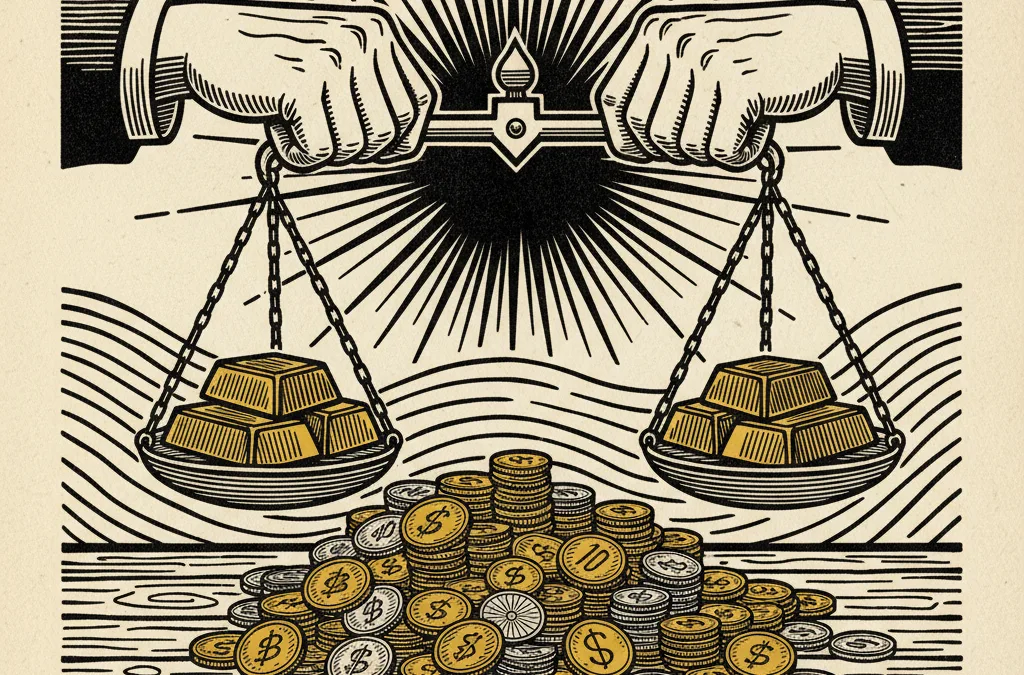
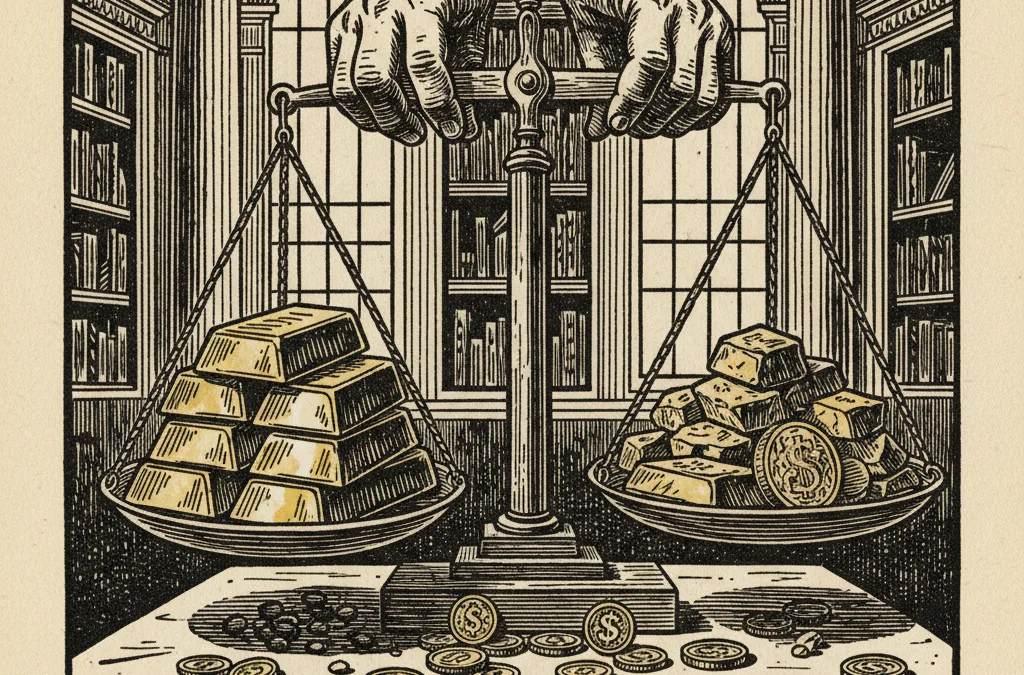
Major bank forecasts for gold in 2026 are unusually spread apart, reflecting genuine uncertainty about whether the metal’s historic rally has room to run or is due for a correction.
What to know
-
Gold is trading at $4,814.90/oz - up 3.5% on the week but still down 5.4% from its monthly high near $5,230, leaving analysts divided on direction.
-
JP Morgan, ANZ, and HSBC have published notably divergent outlooks for gold through 2026, with the spread between bullish and bearish targets wider than at any point since 2020.
-
Tonight’s FOMC minutes release could shift the near-term picture, with rate expectations a key variable separating the bull and bear cases.
What happened
Gold is sitting at $4,814.90/oz in a curiously calm session - essentially flat on the day - after a volatile month that saw it swing between $4,100 and $5,230. That $1,129 range in a single month tells you everything about the current state of conviction in this market. There isn’t much.
The major investment banks have laid out their 2026 gold outlooks, and the divergence is striking. JP Morgan remains firmly in the bullish camp, projecting further upside driven by sustained central bank buying and persistent geopolitical risk premia. ANZ has taken a more measured stance, acknowledging the rally’s strength but flagging valuation concerns at current levels. HSBC has positioned itself as the relative bear, arguing that eventual monetary policy normalisation and a stronger dollar environment could cap gains.
The spread between the most bullish and most bearish institutional targets is wider than we’ve seen in years - a reflection of just how unprecedented the current gold price environment is.
Who’s involved
The three banks represent distinct philosophical camps that have crystallised across the analyst community.
JP Morgan’s bullish thesis leans heavily on structural demand. Central banks - particularly in Asia and the Middle East - have been accumulating gold at a pace not seen since the 1960s. That buying has been relatively price-insensitive, which matters when you’re trying to model a floor.
ANZ sits in the middle, balancing the demand picture against the reality that gold has already moved extraordinarily far, extraordinarily fast. Their positioning suggests they see gold consolidating rather than collapsing - a view that aligns with the current weekly chart, where the 3.5% gain looks more like stabilisation after the sharp pullback from $5,230.
HSBC’s more cautious outlook reflects a macro view that markets may be underpricing the possibility of tighter-for-longer monetary policy. With the gold-silver ratio at 62.7 - compressed relative to its five-year average - there’s an argument that precious metals broadly have run ahead of fundamentals.
Why it matters
When institutional forecasts diverge this sharply, it typically signals an inflection point rather than a continuation. The last time we saw comparable disagreement among major banks was in late 2019, just before gold began its run from $1,500 to $2,000.
The current setup is more complex. Gold has nearly tripled from its 2022 lows, and the drivers have shifted. This is no longer primarily an inflation hedge trade. It’s a de-dollarisation trade, a geopolitical insurance trade, and - increasingly - a momentum trade. Each of those legs has different vulnerabilities.
The 5.4% monthly decline from the $5,230 peak suggests some froth has been cleared. But the speed of the recovery - up 3.5% in a week - shows buyers remain aggressive on dips. That dynamic tends to persist until it doesn’t, and the catalyst for a regime change usually comes from the macro side.
What comes next
Tonight’s FOMC minutes are the immediate focus. Any hawkish surprises on rate expectations could test the $4,740 support that held earlier today. Conversely, dovish signals would likely push gold back toward the $4,900 level.
Beyond the near term, three things matter. First, central bank purchasing data for Q1 2026 - if the pace of accumulation slows, the structural bid weakens. Second, the gold-silver ratio at 62.7. If silver starts outperforming more decisively - it’s already up 5.6% on the week versus gold’s 3.5% - that historically signals risk appetite is broadening. Third, EU retail sales data dropping today will offer a read on whether the European economy is softening enough to keep the ECB on a dovish path, supporting euro-denominated gold demand.
Whether the consensus converges toward the bulls or the bears will determine the next $500 move - but right now, nobody’s willing to bet their reputation on which way that breaks.
This article is for informational purposes only and does not constitute financial advice. Always do your own research before making investment decisions.