On this page
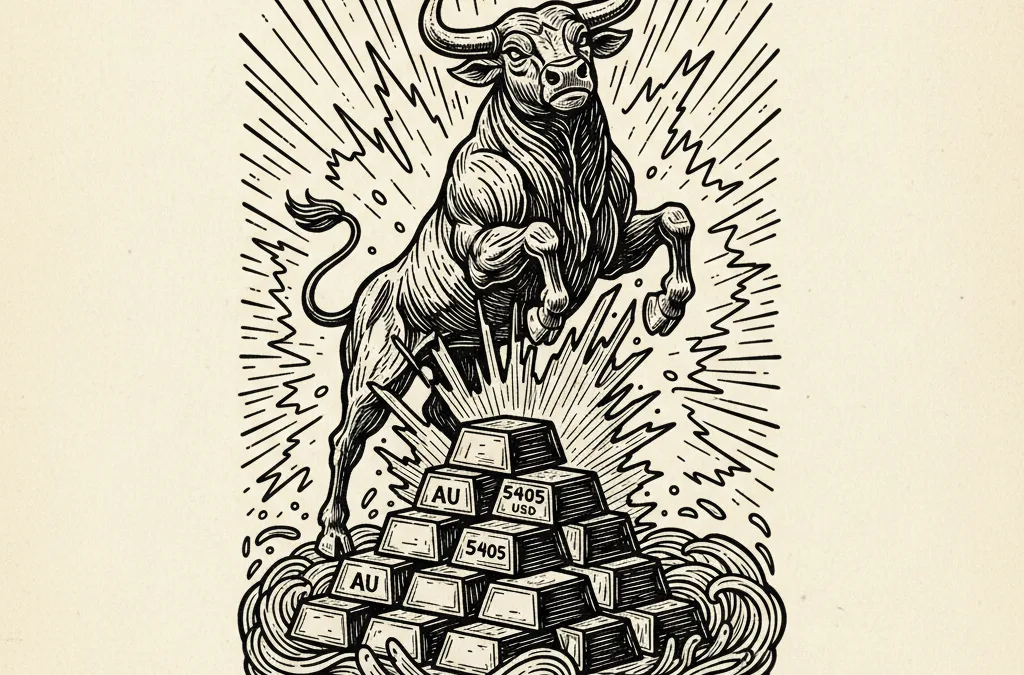
Gold Hits $5,405 as Iran Strikes Spark 17% Monthly Surge
The US-Israel military strikes on Iran have triggered the sharpest safe-haven rally in years, pushing gold above $5,400 and silver past $95 as investors price in a widening West Asian conflict.
What to know
-
Gold surged nearly 17% in a single month to trade at $5,405.80/oz, with an intraday high of $5,434.10 - both unprecedented levels.
-
Silver has outperformed gold with a 24.4% monthly gain, compressing the gold/silver ratio to 56.6 as industrial and safe-haven demand converge.
-
Platinum (+9.4% weekly) and palladium (+2.2% weekly) are rallying in sympathy, signaling broad-based precious metals demand beyond pure safe-haven flows.
What happened
Gold is trading at $5,405.80/oz after a week that redrew the geopolitical map of West Asia. US-Israel strikes on Iran have escalated a conflict that markets had been nervously discounting for months, and the safe-haven bid has been ferocious. The gold price gained $250 in a single week - a 4.85% move - but the monthly picture is even more staggering: a $783 gain representing nearly 17% appreciation from around $4,400 just four weeks ago.
Silver has been the bigger mover. At $95.53/oz, it has surged 24.4% over the past month, with an intraday range today stretching from $92.31 to $97.30. The gold/silver ratio has compressed to 56.6, well below its five-year average near 80, signaling that silver is attracting aggressive speculative and industrial demand simultaneously.
Today’s session shows prices consolidating near highs - gold is essentially flat on the day after printing a new record at $5,434.10. That kind of pause after a vertical move usually reflects profit-taking meeting fresh buying, not exhaustion.
Who’s involved
Central banks remain the structural buyers underpinning this market. The de-dollarization trend that accelerated through 2024 and 2025 has created a persistent bid beneath gold that geopolitical shocks now amplify rather than create from scratch.
Institutional allocators are scrambling. The speed of this move - $1,000 added to gold in roughly six weeks - has caught many systematic strategies offside. CTAs and momentum funds are likely adding length into strength, which compresses the rally but also increases the risk of a sharp unwind if tensions de-escalate.
On the physical side, Middle Eastern and Asian buyers have been consistent. The conflict directly threatens supply routes and regional stability, giving local buyers an additional urgency beyond portfolio hedging.
Platinum at $2,385.60 (+9.4% weekly) and palladium at $1,853 (+2.2% weekly) are being pulled higher too. Platinum’s outperformance over palladium suggests markets are pricing supply disruption risk alongside safe-haven flows - South African and Russian supply chains face different but compounding geopolitical pressures.
Why it matters
This rally has structural depth that previous geopolitical spikes lacked. When gold spiked during the initial Hamas-Israel conflict in late 2023, it was trading around $1,950. The move was sharp but short-lived because the underlying macro backdrop - high real rates, a strong dollar - created natural resistance. Today’s environment is fundamentally different. Real rates have fallen, central banks are actively diversifying reserves away from Treasuries, and the dollar’s dominance is being questioned in ways that have no modern precedent.
The $5,400 level also puts gold in rarefied air for portfolio construction. At these prices, even a modest 5% allocation to precious metals represents significant capital. That hasn’t slowed buying - it’s accelerated it, which tells you something about how institutional investors are assessing tail risk.
Silver’s 24% monthly move deserves particular attention. Historically, silver outperforms gold in the late stages of a bull cycle, but it also outperforms when industrial demand and safe-haven demand align. With the green energy transition still driving structural silver demand, this rally has dual engines.
What happens next
The US ISM Manufacturing PMI due today could reinforce rate-cut expectations if it prints weak, adding fuel to precious metals. A strong number might trigger a brief pullback, though the geopolitical premium now embedded in prices appears sticky. Any sign of Iranian retaliation or further escalation puts $5,500 gold in play this week. The gold/silver ratio at 56.6 suggests silver could be entering a parabolic phase if it breaks below 55 - monitor silver’s $97.30 intraday high as near-term resistance.
This article is for informational purposes only and does not constitute financial advice. Always do your own research before making investment decisions.
Sources & Data
- Silver Institute - annual World Silver Survey
- ONS - ONS Retail Price Index data