On this page
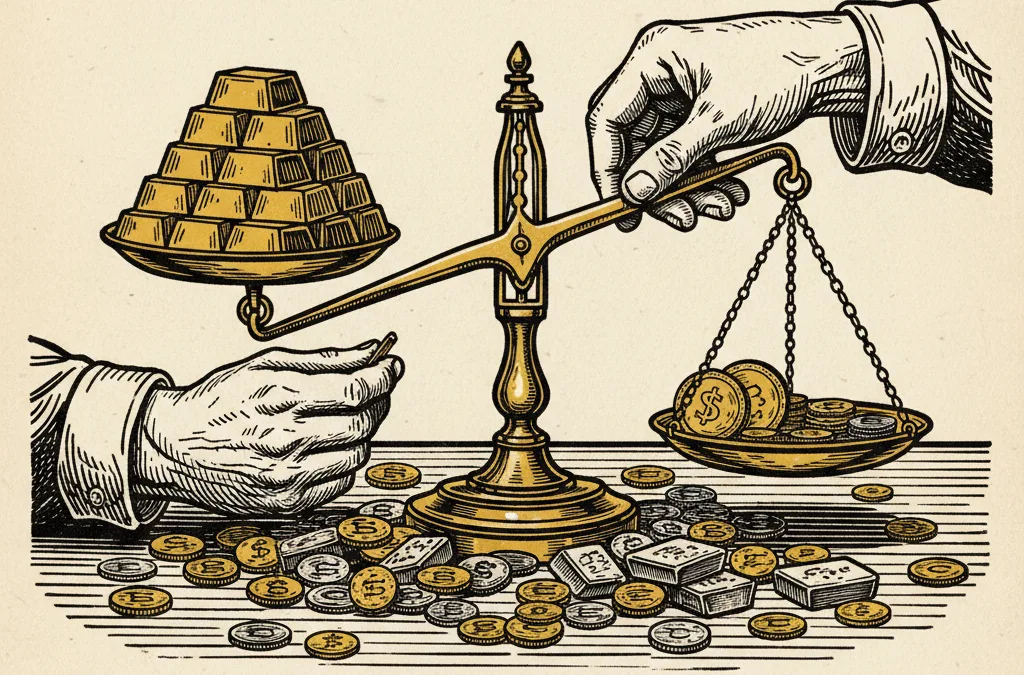
Gold at $5,200 - But Wall Street Can’t Agree Where It Goes Next
Major institutional forecasts for gold and silver in 2026 reveal a striking divergence of opinion, even as both metals hover near record territory with today’s US CPI print poised to reshape the narrative.
What to know
-
Gold trades at $5,199.50/oz with a 2.65% weekly gain, while silver sits at $87.25/oz - up 6.81% on the week - as institutional 2026 forecasts range widely.
-
The gold-to-silver ratio has compressed to 59.6, well below its long-term average near 80, signalling silver’s relative outperformance this cycle.
-
Today’s US CPI release is the single most consequential near-term catalyst, with inflation trajectory directly influencing Fed rate expectations and dollar strength.
What happened
Gold is trading above $5,000/oz and silver is pushing toward $90/oz, yet JP Morgan, ANZ, HSBC, and Franklin Templeton have published 2026 outlooks with unusually wide disagreement on direction. The spread between bullish and cautious camps is wider than typical for this stage of a bull market.
Gold is currently at $5,199.50/oz, up 2.65% over the past week. Silver has moved more aggressively, up 6.81% week-on-week to $87.25/oz. Gold’s monthly range - $4,847.80 to $5,405.00 - represents a $557 swing, more than 10% volatility in a single month. That kind of range used to define an entire year.
Who’s involved
The institutional landscape splits into two camps. JP Morgan and HSBC anchor forecasts around macroeconomic fundamentals: real rates, dollar trajectory, and central bank reserve diversification. Their frameworks have been tested by this cycle, given that gold has rallied despite periods of positive real rates that would historically have capped prices.
ANZ and Franklin Templeton bring different lenses. ANZ’s commodity desk focuses heavily on physical demand dynamics, particularly from Asian central banks and retail buyers. Franklin Templeton’s fixed-income and multi-asset teams view precious metals through a portfolio construction lens - what allocation makes sense given equity valuations and bond market stress.
Even the more cautious voices aren’t calling for a meaningful correction. The floor of institutional consensus appears to sit well above $4,500 for gold, which would have seemed extraordinary eighteen months ago. For silver, the debate centres on whether industrial demand - particularly from solar panel manufacturing and electronics - can sustain prices above $80 or whether speculative froth has pushed the metal ahead of fundamentals.
Why it matters
Institutional forecasts shape capital flows. When major banks publish targets, they influence ETF positioning, options market structure, and corporate hedging behaviour. A wide consensus range creates volatility.
The gold-to-silver ratio at 59.6 is well below the long-term average near 80. Historically, ratios below 60 have either signalled a silver blow-off top or the early stages of a sustained industrial supercycle. The last time silver commanded this kind of relative strength was during the 2010–2011 rally, which ended abruptly. Whether 2026 follows a similar path depends on whether silver’s demand profile has structurally shifted - and the evidence from green energy deployment suggests it has.
central bank buying remains the structural factor. Sovereign purchases have been running at historically elevated levels for three consecutive years, with no sign of fatigue. This bid underpins gold in a way that previous cycles lacked, making traditional mean-reversion models less reliable.
What to watch
Today’s US CPI print is the immediate catalyst. A hotter-than-expected reading would complicate the Fed’s easing timeline and could trigger a brief dollar rally - testing gold’s resilience at the $5,180–$5,200 support zone. A cooler print would likely send gold back toward the monthly high near $5,405.
Three things beyond inflation data: the ECB’s tone - with Guindos speaking today - for signals on European monetary policy divergence from the Fed, which directly impacts the euro-dollar cross and gold’s currency dynamics. Silver’s ability to hold above $85, which has become a key technical level. Whether the gold-to-silver ratio breaks decisively below 58 - a level that would suggest silver is entering a momentum-driven phase that could carry it toward $100.
This article is for informational purposes only and does not constitute financial advice. Always do your own research before making investment decisions.