On this page

Gold’s record run hits turbulence as market forces collide
Gold prices are caught between powerful tailwinds driving them to all-time highs and emerging headwinds that signal the rally may be losing momentum.
What to know
- Gold has surged to record levels above previous peaks, driven by central bank buying, geopolitical uncertainty, and inflation hedging demand
- Three distinct bullish factors have converged to push prices higher over recent months
- A counteracting force - likely profit-taking or shifting monetary policy expectations - is now creating downward pressure
What happened
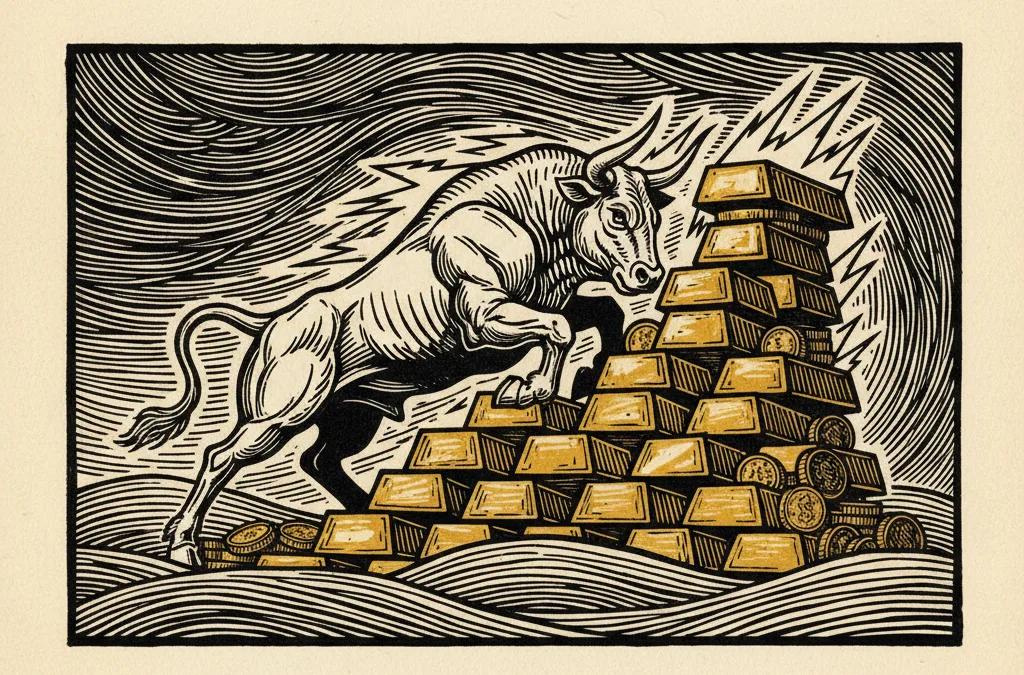
Gold prices have pushed into record territory, surpassing the psychological barriers that held for months. The move higher reflects a confluence of three major drivers: aggressive central bank accumulation, persistent geopolitical tensions, and investors seeking inflation protection as real yields remain historically compressed.
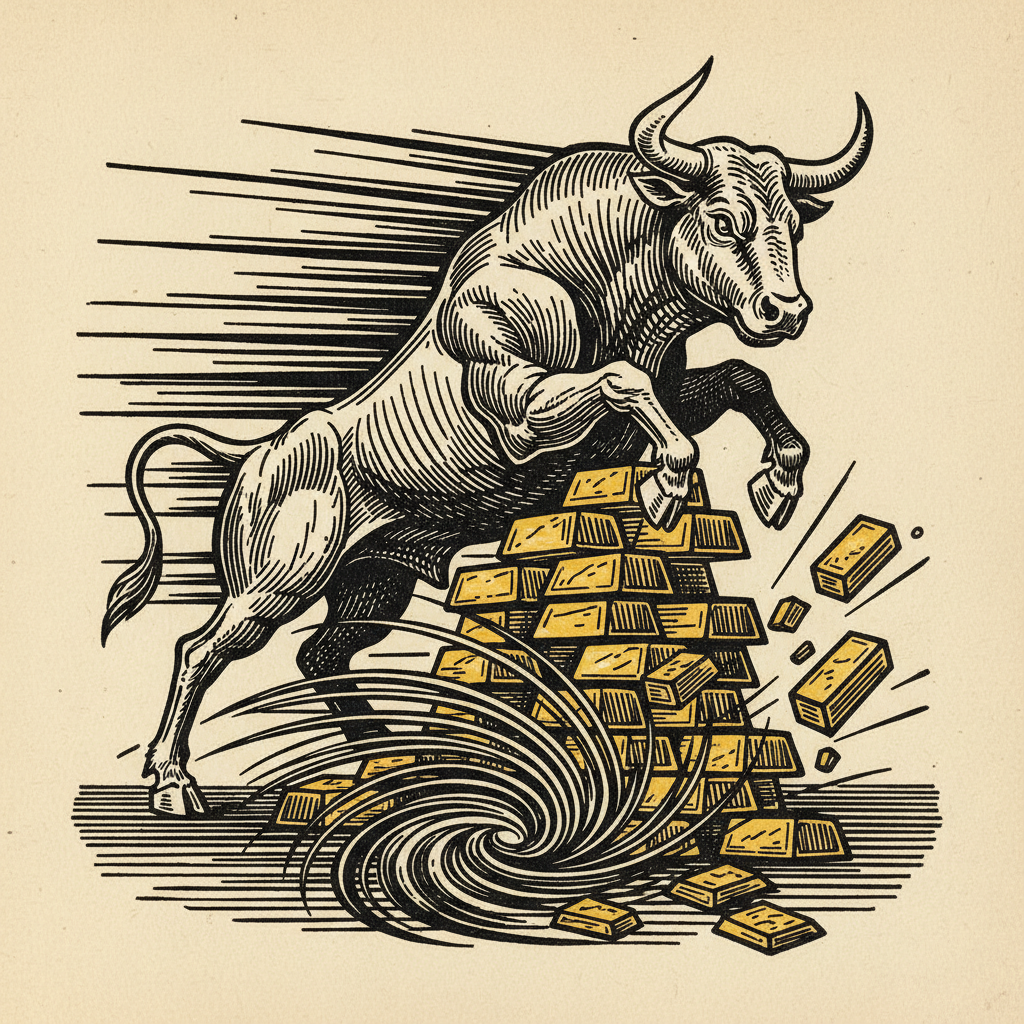
Yet even as our live gold price tracker shows new highs, the metal is experiencing notable pullbacks. The same market that drove gold to records is now showing signs of fatigue, with one significant factor - most likely profit-taking after the extended rally or recalibrated expectations around Federal Reserve policy - creating downward pressure that’s testing recent support levels.
Who’s involved
Central banks, particularly those in emerging markets, have been net buyers on a scale not seen since the 1970s. China, Russia, and Turkey have led this accumulation, diversifying reserves away from dollar-denominated assets. This institutional demand has provided a floor under prices that retail selling hasn’t been able to break.
On the other side, institutional investors who rode the rally from lower levels are now reassessing their positions. ETF outflows in recent sessions suggest some profit-taking is underway, while options markets show increased hedging activity. Jewellery demand, traditionally a stabilizing force, has weakened at these elevated price points, removing a key source of physical buying.
Why it matters
This tug-of-war reveals something fundamental about the current gold market: the traditional drivers are all firing, yet the rally is struggling to maintain momentum. That divergence matters because it suggests we’re at an inflection point where the next 10% move could go either direction.
The central bank buying that’s underpinned this rally isn’t cyclical - it reflects a structural shift in how reserve managers view dollar exposure. That’s a multi-year trend. But the profit-taking we’re seeing now is tactical, driven by short-term positioning and rate expectations. When structural and cyclical forces collide, volatility typically follows.
For precious metals investors, the current setup resembles early 2020, when gold consolidated near highs before breaking decisively higher. The difference now is that real yields are no longer deeply negative, removing one of the most powerful tailwinds from the 2020-2021 rally.
What to watch
Three indicators matter most right now. First, the dollar index - any sustained weakness below 104 would likely reignite gold’s upside momentum. Second, central bank purchase data from the World Gold Council, which reports quarterly. A slowdown there would be genuinely bearish.
Third, the 10-year Treasury real yield. If it breaks back below 1.5%, that changes the opportunity cost calculation for holding gold and could trigger renewed institutional buying. Conversely, a move above 2% would likely accelerate the current pullback.
The options market is pricing elevated volatility through March, suggesting traders expect resolution one way or another soon. This article is for informational purposes only and does not constitute financial advice. Always do your own research before making investment decisions.