On this page
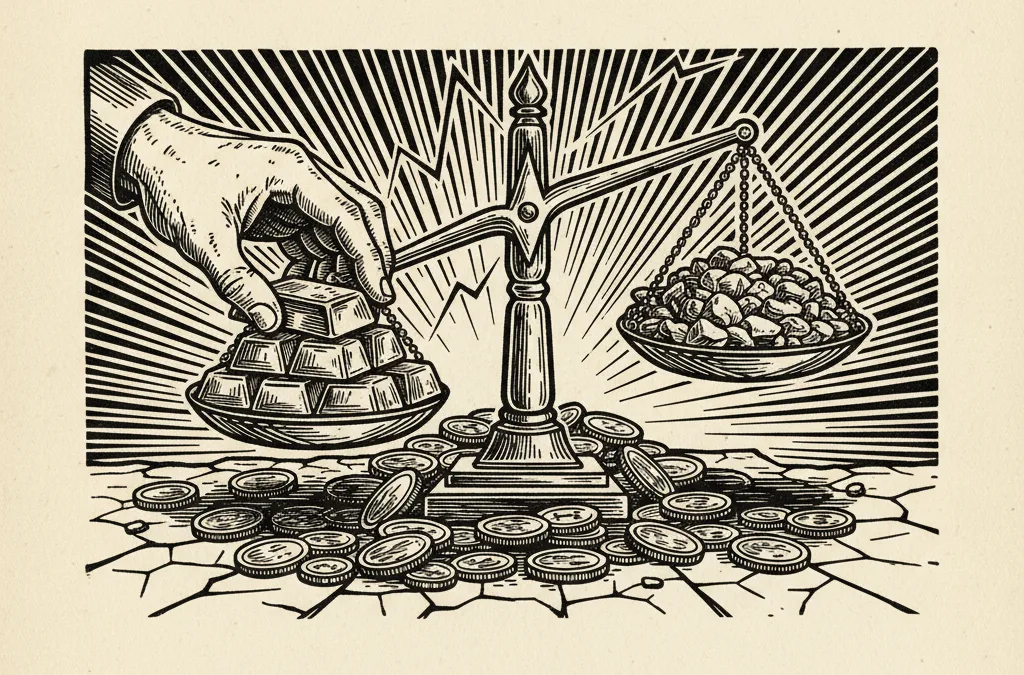
Gold’s Path to $6,000 - And the Case for Five Digits
Gold is trading above $4,660, placing the $6,000 target just 29% away - while CRU Group has outlined a scenario in which systemic loss of confidence could push prices into five-digit territory.
What to know
-
Gold at $4,666 per ounce is now 29% below $6,000, a target gaining traction among institutional analysts.
-
CRU Group has modelled a scenario in which sustained loss of confidence in the global financial system could push gold above $10,000.
-
The gold-to-silver ratio sits at 64.8, suggesting silver is keeping pace with gold’s rally rather than lagging as it did in earlier bull phases.
What happened
Gold is holding above $4,660 per ounce after a rally that has added roughly 40% over the past year. The $3,000 barrier fell with little fanfare. The $4,000 level barely registered as resistance. Now $6,000 is the next psychological milestone, requiring a move of just 29% from current levels.
CRU Group has laid out a base case targeting $6,000, driven by continued central bank accumulation, persistent geopolitical fragmentation, and structural fiscal deficits across major economies. Their more extreme scenario - five-digit gold above $10,000 - assumes a sustained erosion of trust in sovereign creditworthiness.
Tracking the live gold price in 2026 has meant constantly recalibrating forecasts. What counted as ambitious 18 months ago is now within range of a single strong year.
Who’s involved
Central banks remain the dominant force. Sovereign buyers have been net purchasers for over a decade, but the pace has accelerated sharply since 2022. China, India, Poland, and a growing list of emerging market central banks are diversifying reserves away from dollar-denominated assets. This is strategic reallocation on a multi-year horizon, not speculative positioning.
On the retail and institutional side, Western investors have re-engaged after sitting out much of the early rally. Gold ETF holdings have been climbing steadily, and the futures market shows managed money positioning at elevated but not extreme levels.
Why it matters
The $6,000 target is notable but no longer radical. The five-digit scenario deserves closer attention. If a major sovereign debt crisis, a breakdown in the US Treasury market, or a loss of confidence in fiat currencies were to materialise, gold would not simply rise - it would reprice as the default store of value for a generation.
Gold rose roughly 2,300% during the 1970s bull market as the Bretton Woods system collapsed and inflation spiralled. A comparable percentage move from the 2015 low of around $1,050 would place gold well above $25,000. The five-digit case requires merely a sustained erosion of trust in sovereign creditworthiness.
The gold-to-silver ratio at 64.8 is worth noting. In previous systemic stress episodes, silver has tended to outperform gold once momentum builds. The current ratio suggests silver at $72 is participating in the rally rather than being left behind, which historically signals broad-based precious metals demand rather than a narrow flight-to-safety trade.
What to watch
Three indicators matter most. First, US real yields - if the Federal Reserve is forced to cut rates while inflation remains sticky, the opportunity cost of holding gold collapses further. Second, central bank buying data, published quarterly by the World Gold Council. Any acceleration from current levels would remove significant supply from the market. Third, credit default swap spreads on major sovereign debt. A widening in US or European CDS would signal that the five-digit scenario is moving from theoretical to plausible.
The $5,000 level is the next major test, likely before the end of Q2.
This article is for informational purposes only and does not constitute financial advice. Always do your own research before making investment decisions.