On this page
Gold’s Bull Case Strengthens Even After Sharp Pullback
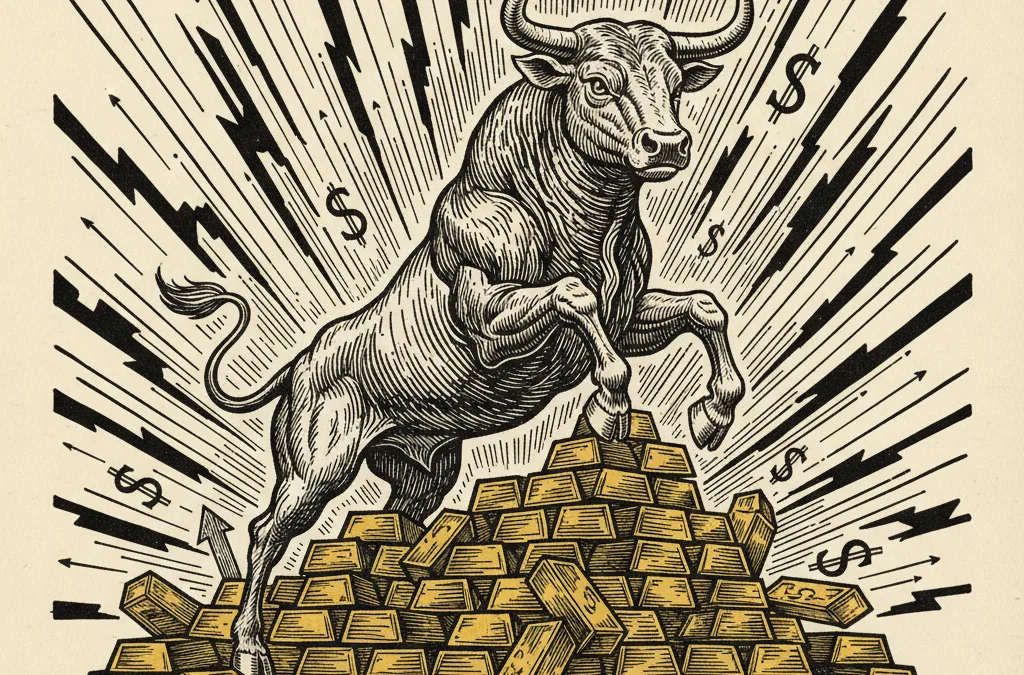
Gold sits 12% below its March highs yet the structural case for further upside is arguably stronger than it was at $5,400 - and major institutional desks are leaning in.
What to know
-
Gold is trading at $4,646/oz after a 12% pullback from its March high of $5,405, but has gained 3.4% this week alone.
-
Major institutional sentiment remains firmly bullish, with upside risks - including persistent central bank buying and geopolitical fragmentation - seen outweighing downside scenarios.
-
The gold-silver ratio at 65.2 suggests silver is keeping pace, while palladium’s 5.7% weekly surge hints at broader precious metals momentum.
What happened
Gold has climbed 3.4% this week to $4,646/oz after one of its sharpest monthly corrections in recent memory. The gold price touched $5,405 in March before sellers drove it down to a low of $4,100 - a drawdown of nearly 24% peak to trough. That kind of volatility would have shaken out weaker hands, but the bounce back above $4,600 suggests dip buyers remain aggressive.
The broader institutional view is shifting from cautious optimism to outright conviction. The bull case now centres on a growing list of upside risks - from sticky inflation expectations to accelerating central bank reserve diversification - that major desks see as asymmetric. The structural drivers behind this multi-year rally remain intact despite the recent turbulence.
Who’s involved
Central banks continue to be the dominant force. Sovereign buying has been a defining feature of the gold market since 2022, and there are no signs of fatigue. Emerging market central banks, particularly across Asia and the Middle East, are still adding to reserves at a pace that dwarfs historical norms.
On the institutional side, the mood is firmly bullish. Major banks are maintaining or raising their gold forecasts, pointing to a combination of fiscal deterioration in developed economies, geopolitical fragmentation, and the structural shift away from dollar-denominated reserves. Retail investors appear to be using the pullback as an entry point - physical demand and ETF inflows have ticked higher in recent sessions.
Silver is tracking gold closely, with the gold-silver ratio sitting at 65.2 - relatively compressed compared to the 80-plus levels seen during periods of gold-only rallies. That ratio tells us the broader precious metals complex is participating, not just gold. Palladium’s 5.7% weekly gain reinforces that read.
Why it matters
Institutional conviction is strengthening during a pullback - not at all-time highs. That suggests the bull thesis is rooted in macro fundamentals that haven’t changed, not momentum alone.
Consider the context. Gold has roughly doubled from its 2024 levels. In prior bull cycles - the 1970s run and the 2008-2011 surge - corrections of 15-25% were routine within the broader uptrend. The March pullback fits that pattern precisely. The underlying drivers persist: real rates remain historically low relative to inflation expectations, US fiscal deficits show no sign of narrowing, and de-dollarisation is a structural trend measured in decades, not quarters.
Today’s US initial jobless claims data could add another layer. A softening labour market would reinforce expectations of looser monetary policy ahead - a classically bullish setup for gold. UK inflation expectations data, also due today, will be watched for signals on whether the Bank of England has room to cut, which would support sterling-denominated gold demand.
What to watch
The $4,800-$4,850 zone is the immediate resistance level. Gold touched $4,825 in today’s session range before pulling back. A decisive close above that level would confirm the recovery has legs.
On the downside, the $4,100 March low is the line in the sand. A retest would challenge the bull narrative and likely trigger a broader reassessment.
Central bank purchasing data over the coming weeks will be critical. Any acceleration in sovereign buying during the dip would be a powerful confirmation signal. The US goods trade balance, also due today, could move the dollar - and by extension gold - if it surprises in either direction. If silver and palladium continue to outperform on a relative basis, the rally is broadening rather than narrowing - but whether that momentum holds through the next resistance test remains an open question.
This article is for informational purposes only and does not constitute financial advice. Always do your own research before making investment decisions.