On this page
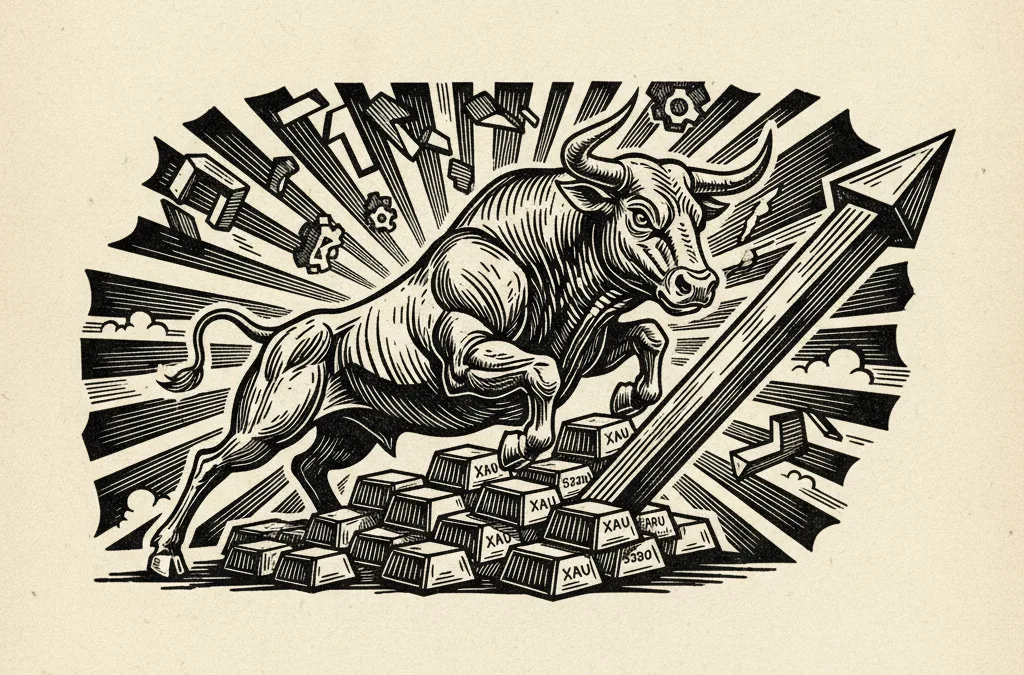
Gold Surges Past $5,200 as Tariff Fears Fuel 7% Weekly Rally
Gold has climbed nearly $340 in a single week to trade above $5,220, with a fresh tariff ruling accelerating the metal’s already ferocious 2026 momentum.
What to know
-
Gold opened Monday above $5,100 and climbed through the session to $5,223, marking a weekly gain of nearly 7% - one of the strongest weekly performances in years.
-
The rally was triggered by a new tariff ruling that has reignited trade-war anxieties, pushing investors into safe-haven assets across the board.
-
Silver outpaced gold on the week with an 18.3% surge, compressing the gold/silver ratio to 60.1 - a level that historically signals broad precious metals momentum.
What happened
Gold opened above $5,100 on Monday morning before extending gains through the session to reach $5,223 - just $3 shy of its intraday high of $5,226. The move caps a weekly advance of $340.50, or nearly 7%, driven by renewed tariff escalation.
The session’s range tells the story: gold traded between $5,120 and $5,226, with buyers stepping in on every dip. On a monthly basis, the metal is up nearly 5%, though the real action has concentrated in the past five trading days. The month’s range - from $4,400 to as high as $5,586 - underscores the volatility. Tracking the gold price in real time has become essential for anyone positioned in this space.
Who’s involved
Central banks remain the structural bid underneath this market. The tariff ruling has rotated institutional capital into hard assets at pace. Sovereign wealth funds, particularly in Asia and the Middle East, have been consistent accumulators throughout 2026, and this week’s price action suggests that buying has intensified.
On the speculative side, momentum traders are piling in. A 7% weekly move in gold draws trend-following capital, and the compression of the gold/silver ratio to 60.1 suggests the rally is broadening. Silver’s 18.3% weekly surge - dramatically outpacing gold - is typical of late-cycle precious metals rallies where speculative enthusiasm spills into the smaller, more volatile market.
Platinum (+7.2% on the week to $2,157) and palladium (+6.4% to $1,783) are moving in sympathy. This is a full-complex precious metals bid, not an isolated gold trade.
Why it matters
Weekly gains of 7% in gold are rare - the kind of moves typically associated with acute geopolitical crises or systemic financial stress. The metal has now doubled from its 2024 levels.
The tariff catalyst matters because it feeds directly into the two forces that have powered gold all year: inflation expectations and de-dollarization anxiety. Tariffs raise input costs across supply chains and simultaneously erode confidence in the rules-based trading system that underpins dollar hegemony. Gold benefits on both fronts.
The macro calendar adds another layer of uncertainty. Fed Governor Waller speaks later today, and ECB President Lagarde is also scheduled. The Dallas Fed Manufacturing Index, also due today, could offer early evidence of tariff impacts on U.S. industrial activity.
Silver’s divergence is worth noting separately. While gold is up 5% on the month, silver is actually down nearly 14% over the same period despite this week’s explosive rally. That kind of whipsaw volatility - from $100+ levels down to the mid-$70s and now back to $87 - reflects a market caught between industrial demand fears and monetary demand tailwinds.
What to watch
The $5,226 intraday high is the immediate resistance level. A clean break above it opens the door to retesting the monthly high near $5,586. On the downside, the $5,100 open has become near-term support.
Fed rhetoric is the key macro variable this week. The gold/silver ratio at 60.1 deserves close monitoring - a move below 55 would signal that silver is taking the lead, historically a sign of the most aggressive phase of precious metals bull runs.
This article is for informational purposes only and does not constitute financial advice. Always do your own research before making investment decisions.
Sources & Data
- European Central Bank - ECB speeches and policy statements
- ONS - ONS Retail Price Index data