On this page
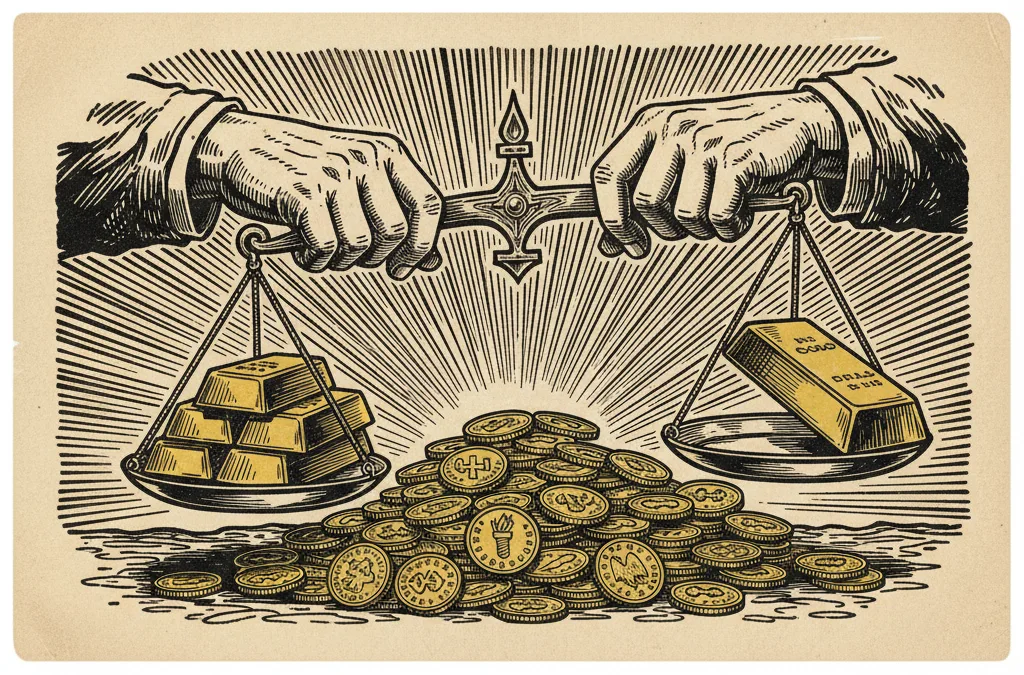
Gold Steadies as Trump’s Hormuz Deadline Extension Eases Panic
Gold is holding near $4,460 after a volatile week, as President Trump’s decision to extend the Strait of Hormuz deadline defuses immediate escalation fears but keeps the geopolitical bid firmly intact.
What to know
-
Gold traded at $4,462.70 on Friday, up 1.33% on the week but still down nearly 15% from its monthly high above $5,400.
-
Trump extended a deadline related to the Strait of Hormuz, easing the acute risk premium but maintaining underlying geopolitical uncertainty.
-
The gold-silver ratio has compressed to 65.2, suggesting silver’s sharper monthly decline of 26% is drawing relative-value attention.
What happened
Gold firmed modestly on Friday, trading at $4,462.70 - up just $1.40 on the day but recovering from an intraday low of $4,369.10. President Trump extended a deadline tied to the Strait of Hormuz, through which roughly 20% of global oil supply flows. The extension pulls the market back from an immediate confrontation scenario that had been weighing on risk assets all week.
The weekly picture is more constructive. Gold has gained $58.60, or 1.33%, over the past five sessions, clawing back ground after a brutal month. The metal remains down $767.80 - a staggering 14.68% - from its monthly highs, having touched $5,405 earlier in March before the sharpest correction in recent memory.
Silver has fared worse, shedding 26.13% over the month to trade at $68.46. Platinum sits at $1,851.10, while palladium is flat at $1,390.
Who’s involved
The White House is the dominant force here. Trump’s Hormuz policy - the specifics of which remain deliberately vague - has created a binary risk environment for precious metals. Traders have been caught between pricing in a potential disruption to Gulf energy flows and the possibility that the deadline is primarily a negotiating tactic.
Central bank buyers, who have been consistent accumulators throughout 2025 and into 2026, are likely viewing this correction as an opportunity. The pullback from $5,405 to the $4,100 area earlier this month represented a near-25% drawdown - the kind of move that historically attracts sovereign wealth funds and reserve managers.
Speculative positioning appears stretched on the short side after the monthly sell-off. Friday’s narrow range of $100 between the day’s high and low suggests the market is coiling, waiting for the next directional catalyst.
Why it matters
The Hormuz dynamic is a textbook safe-haven trigger, but the market’s muted reaction on Friday reveals something important: traders have already partially priced in the geopolitical premium and are now recalibrating. The extension of the deadline does not remove the threat - it merely delays it.
The severity of the monthly correction is striking. A 15% drawdown from $5,405 to current levels echoes the violent retracements gold experienced after its 2020 pandemic spike and again during the 2024 rally. In both cases, the metal eventually recovered and set new highs within three to six months. The structural drivers - central bank demand, fiscal deficit concerns, and persistent geopolitical friction - have not changed.
The gold-silver ratio at 65.2 is worth noting. Silver’s 26% monthly decline versus gold’s 15% suggests the industrial component of silver demand is under pressure, possibly reflecting concerns about a broader economic slowdown if Hormuz tensions escalate into actual supply disruptions.
Michigan Consumer Sentiment data due later today could add another layer. A weak reading would reinforce the case for Federal Reserve caution on rates, which typically supports gold. A stronger number might embolden dollar bulls and pressure metals further.
What happens next
The $4,369 intraday low is the near-term floor. A break below that level reopens the path toward $4,100, where gold found support earlier this month. On the upside, a sustained move above $4,470 would suggest the weekly recovery has legs, but the Hormuz situation remains the primary variable and any indication that the extended deadline will lapse without a deal could send gold sharply higher.
This article is for informational purposes only and does not constitute financial advice. Always do your own research before making investment decisions.