On this page
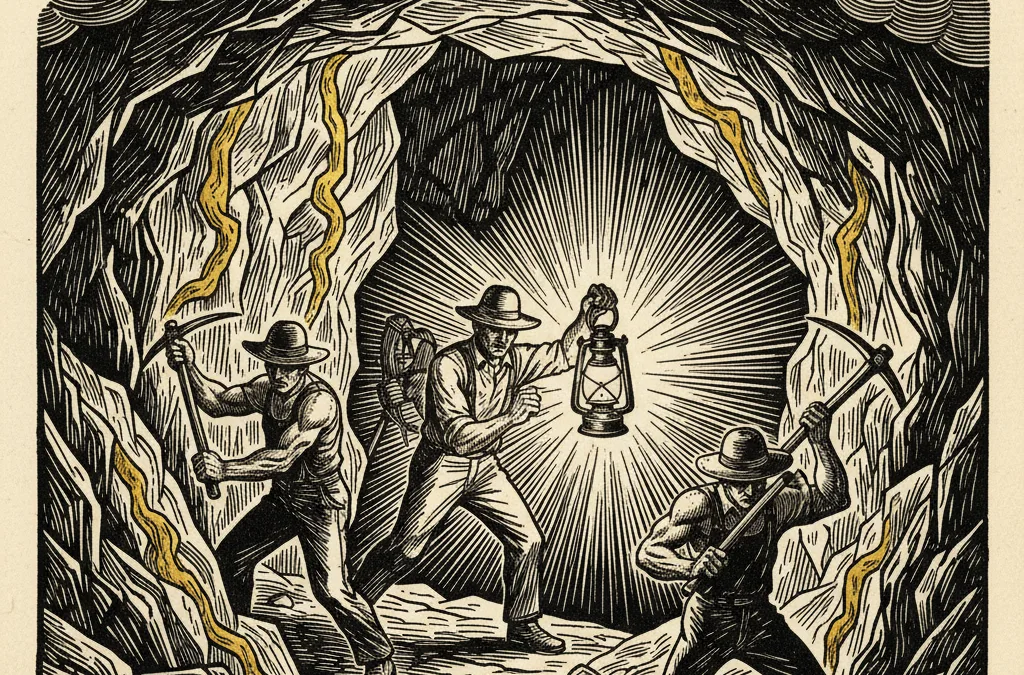
Gold Miners’ Nevada Rift Deepens - Even as Prices Top $5,000
The escalating dispute between Newmont and Barrick over their Nevada Gold Mines joint venture threatens to disrupt output from one of the world’s most prolific gold-producing regions, just as the metal trades above $5,000 an ounce.
What to know
-
The Newmont-Barrick conflict over Nevada Gold Mines - the world’s largest gold-producing complex - is intensifying, with disagreements over operational control and Barrick’s planned spinoff of its stake.
-
Gold is trading at $5,080.90/oz, up over 5% in the past month, making the production implications of this dispute increasingly material to global supply.
-
Nevada Gold Mines has seen declining output in recent quarters, and unresolved corporate friction could accelerate that trend at the worst possible time for supply.
What happened
Barrick Gold and Newmont - the two largest gold miners globally - are fracturing over the future of Nevada Gold Mines (NGM), the joint venture that produces more gold than most entire countries. Barrick holds the 61.5% operating stake, while Newmont owns 38.5%. The two sides are increasingly at odds over governance, capital allocation, and Barrick’s ambition to spin off or restructure its NGM interest into a standalone entity.
The dispute has been simmering for months and is now reaching a critical inflection point. Barrick’s push to carve out its Nevada assets - potentially listing them separately - has met resistance from Newmont, which appears unwilling to cede influence over a complex that still accounts for a significant share of its production profile. NGM’s output has been trending lower, with grades declining at several key deposits and capital spending decisions becoming a flashpoint between the partners.
Who’s involved
Barrick CEO Mark Bristow has signaled his desire to unlock what he sees as trapped value in the Nevada portfolio. A pure-play Nevada gold vehicle, operating in a Tier 1 jurisdiction with gold above $5,000, could command a premium valuation that gets lost inside Barrick’s sprawling global portfolio.
Newmont, under CEO Tom Palmer, is taking a more defensive posture. As the minority partner, Newmont has limited operational control but significant blocking power on strategic decisions. The company has little incentive to facilitate a restructuring that could dilute its influence or complicate its own production accounting.
Analysts covering the sector are growing uneasy. The JV was formed in 2019 to eliminate the kind of corporate friction that now defines the relationship. The original promise - operational synergies, shared infrastructure, reduced costs - looks increasingly hollow if the partners can’t agree on the venture’s direction.
Why it matters
Nevada Gold Mines produced roughly 3.2 million ounces annually at its peak, making it the single largest gold-producing complex globally. Any disruption to capital investment, mine planning, or operational focus has direct implications for global precious metals supply.
Gold at $5,080.90 - up 4% this week alone and over 5% in the past month - reflects a market already pricing in supply tightness alongside persistent macro uncertainty. The month’s range of $4,400 to $5,586 shows how volatile sentiment has become. The prospect of one of the world’s top gold complexes becoming mired in corporate infighting complicates forward supply estimates.
When Barrick and Newmont were rivals competing over the same Nevada deposits pre-2019, operational inefficiencies were rampant - duplicated infrastructure, competing mine plans, suboptimal sequencing. The JV was supposed to fix that. If the partnership unravels, the industry risks a reversion to that fragmented, higher-cost model.
Even at $5,000+ gold, the mining sector struggles with internal coordination. Valuations for gold equities have lagged the metal itself for years. Investors looking at the gold-to-GDX ratio see a sector that consistently destroys the optionality that record prices should deliver.
What happens next
Three things to monitor: any formal legal filings or arbitration proceedings - once lawyers get involved, resolution timelines extend dramatically. Second, NGM’s next production and cost guidance; if capex is being deferred because the partners can’t agree, we’ll see it in the numbers within two quarters. Third, Barrick’s Q1 update for any language signaling it’s prepared to force the restructuring unilaterally. At $5,000+, the financial incentive to resolve this is enormous, but corporate strategy doesn’t always follow the price chart.
This article is for informational purposes only and does not constitute financial advice. Always do your own research before making investment decisions.