On this page
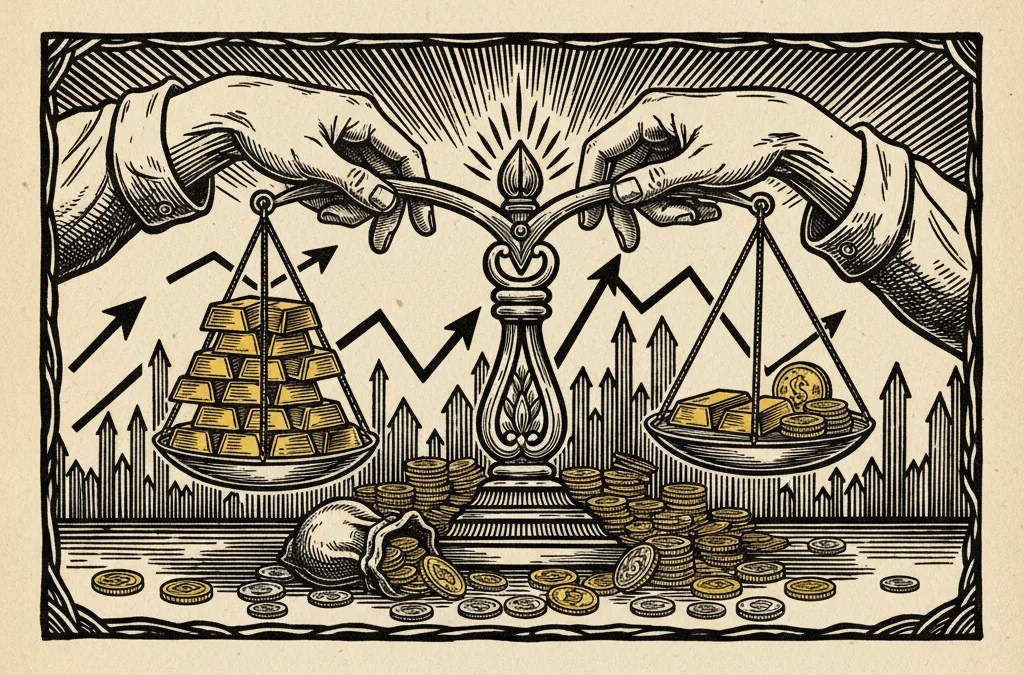
Gold Holds Above $5,000 as Weak Jobs Data Fuels Rate Cut Bets
A soft US payrolls print has handed gold bulls exactly the macro catalyst they needed, with the metal consolidating above $5,100 even as broader precious metals retreat sharply on the week.
What to know
-
Gold is trading around $5,159 after firming near $5,090 on Friday’s weak non-farm payrolls data, up 2.1% on the month despite a 2.6% weekly pullback from highs above $5,400.
-
Soft labour market data has eased Treasury yield pressure and weighed on the dollar, reinforcing expectations for Federal Reserve rate cuts later this year.
-
Silver, platinum, and palladium have all underperformed gold this week - with platinum down over 7% - indicating the rally is driven by macro hedging rather than broad industrial demand.
What happened
Gold firmed near $5,090 on Friday after the March non-farm payrolls report came in weaker than expected, tempering the yield pressure that had been capping the metal’s advance earlier in the week. By Monday’s session, gold had pushed higher still to $5,159 - comfortably above the psychologically important $5,000 level that has acted as a floor since mid-February.
The weekly picture tells a more nuanced story. Gold is down roughly 2.6% from its recent high above $5,400, a level it touched earlier in the week before retreating. That pullback looks orderly rather than panicked. The month-to-date gain of $108 - or 2.1% - remains intact, and the trading range between $4,848 and $5,405 indicates the market is digesting gains rather than reversing course.
The divergence across the precious metals complex is sharp. Silver has shed 4.5% on the week to $84.31, platinum has dropped 7.4% to $2,142, and palladium has fallen 5.7% to $1,662. The gold/silver ratio sitting at 61.2 reflects gold’s relative outperformance - a pattern typically associated with macro-driven safe-haven flows rather than a broad precious metals bid.
Who’s involved
The Federal Reserve is the central actor here, even without having said a word. Weak payrolls data shifts the probability distribution for rate cuts, and futures markets have responded accordingly. Lower yields reduce the opportunity cost of holding non-yielding assets like gold, and that mechanical relationship has been the primary driver of this latest leg higher.
Dollar bears are also playing a role. A softer labour market undermines the case for US exceptionalism that has propped up the greenback, and any sustained dollar weakness tends to amplify gold’s appeal for non-USD buyers. Central bank purchasing - which has been a structural pillar of the gold market for the past three years - continues in the background, providing a demand floor that previous cycles didn’t have.
Institutional positioning appears to favour the long side. The pullback from $5,405 has been met with buying interest rather than capitulation, indicating that the dip-buying mentality that has characterised this bull run since gold broke through $3,000 remains firmly entrenched.
Why it matters
The payrolls-to-gold transmission mechanism is well established, but the speed and scale of this cycle’s moves are worth noting. Gold has more than doubled from its $2,500 range in late 2024, and the fact that a single soft data point can still propel the metal higher - even from these elevated levels - speaks to the depth of underlying demand.
The divergence from other precious metals is particularly telling. When gold rallies while platinum and palladium fall sharply, it indicates that the bid is coming from monetary hedging and portfolio insurance rather than from any improvement in industrial fundamentals. This is a macro trade, not a commodities trade - and that distinction matters for how sustainable the move proves to be.
Historically, gold tends to accelerate when rate-cut expectations solidify. The 2019 analogue is instructive: gold rallied roughly 20% between May and September as the Fed pivoted from hikes to cuts. The current setup - with gold already at record levels and cuts still being priced in - indicates the market is front-running an easing cycle that hasn’t fully materialised.
What comes next
Three things matter now. First, the next round of inflation data - if CPI remains sticky while payrolls soften, gold could benefit from a stagflationary narrative that is historically one of the metal’s strongest backdrops. Second, Treasury yields: the 10-year needs to stay below its recent highs for the gold bid to hold. Any reversal in rate-cut expectations would test the $5,000 floor quickly.
The gold/silver ratio at 61.2 is elevated but not extreme. A move above 65 would confirm that this rally is purely a gold story - and that silver’s industrial exposure is becoming a drag rather than a tailwind.
This article is for informational purposes only and does not constitute financial advice. Always do your own research before making investment decisions.