On this page
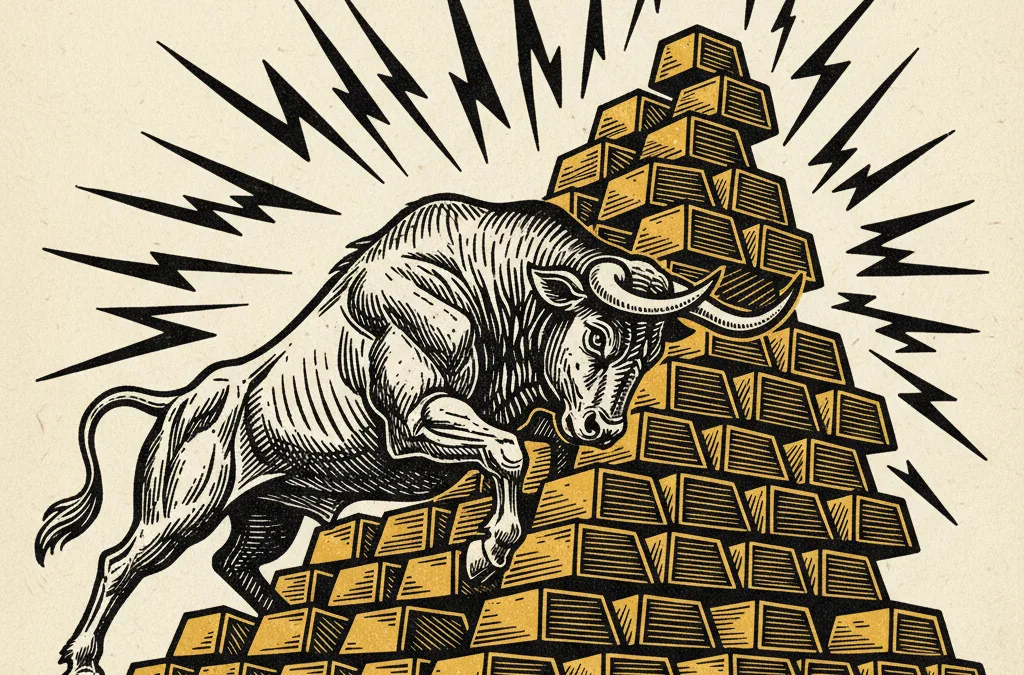
Gold Hits $5,000 - But the Rally May Not Be Done
Gold breached $5,000/oz after a 5% monthly surge, driven by central bank buying and Western ETF inflows that show no signs of slowing.
What to know
-
Gold is trading at $5,005.50/oz after gaining $245.90 (+5.17%) over the past month, with an intraday range that briefly touched $5,031.90.
-
The gold/silver ratio sits at 64.9, while silver has dropped 18% over the same month - a divergence that indicates gold-specific demand rather than broad precious metals enthusiasm.
-
UK inflation data and US housing starts are due this week, both of which could influence Fed and BoE rate expectations and gold’s direction.
What happened
Gold crossed $5,000 per ounce on Tuesday, settling at $5,005.50 after a 1.66% weekly gain. The intraday high of $5,031.90 marks new territory, though the month’s broader range - from $4,400 to $5,586.20 - reveals considerable volatility.
The metal has added nearly $250 in a single month. For context, gold’s entire move from $1,800 to $2,000 in 2023 took roughly five months. The acceleration is unmistakable.
Who’s involved
Central banks remain the dominant force. Sovereign buying - particularly from China, India, Poland, and several Gulf states - has been relentless over the past 18 months, absorbing physical supply at a pace that dwarfs anything in the post-Bretton Woods era. This is structural reallocation by institutions with multi-decade horizons, not speculative positioning.
Western ETF flows have turned meaningfully positive after years of net outflows. Retail and institutional investors in North America and Europe appear to be entering positions, adding momentum on top of the central bank bid.
Silver tells a different story. At $77.14, it’s down 18% on the month even as gold surges. The gold/silver ratio at 64.9 is compressing from recent highs, but silver’s underperformance indicates the current rally is driven by monetary and geopolitical demand for gold specifically, not a broad commodities wave. Platinum (+3.88% weekly) and palladium (+5.28% weekly) are firmer, but neither matches gold’s momentum.
Why it matters
The $5,000 level represents a repricing of gold’s role in the global financial system. When gold crossed $2,000 in 2020, the narrative was pandemic response. When it broke $3,000, it was inflation hedging. At $5,000, the story appears to be sustained concern about fiat reserve structures and sovereign debt sustainability.
The U.S. fiscal trajectory is a key factor. With federal debt-to-GDP ratios at historic highs and no credible consolidation path from either political party, gold is increasingly functioning as a parallel reserve asset. Central banks - the institutions that issue fiat currency - are the largest buyers.
There’s also a reflexivity element. Each new high brings in fresh capital, tightens physical supply, and reduces miner hedging. The feedback loop that powered gold from $2,500 to $3,500 is now operating at a higher base with more participants.
What to watch
UK inflation data (due today) could shift Bank of England rate expectations, influencing GBP-denominated gold and broader sentiment. US housing starts and building permits - also releasing today - will offer a read on whether the American consumer is buckling under rate pressure. Weak housing data would reinforce the case for Fed cuts, which historically supports gold.
Three factors matter beyond this week. First, whether gold holds above $4,900 on any pullback - that level represents the breakout zone. Second, the gold/silver ratio: if it expands further above 65, it signals gold is being bought as a monetary asset, not a commodity. Third, ETF flow data over the next 30 days will show whether Western investors are rotating into gold at scale, which would tighten the supply-demand picture considerably.
This article is for informational purposes only and does not constitute financial advice. Always do your own research before making investment decisions.
Sources & Data
- CFTC - weekly Commitment of Traders positioning data
- Bank of England - MPC minutes and policy statements
- ONS - ONS inflation statistics