On this page
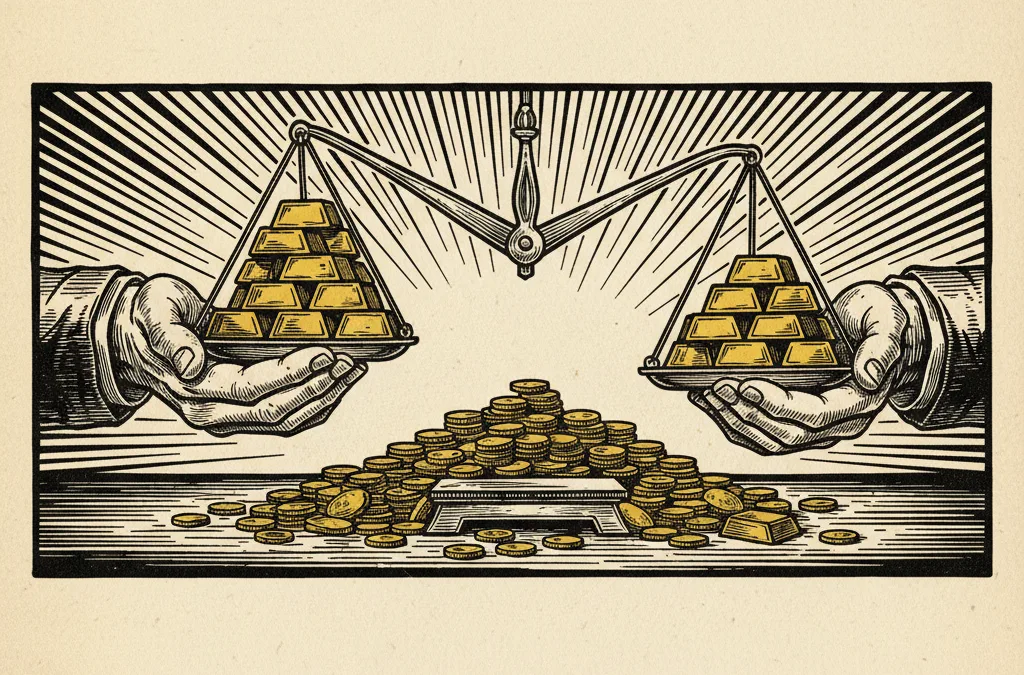
Gold Eyes $6,200 - But $5,000 Resistance Looms
UBS has set a $6,200 gold target for 2026, yet with spot prices stalling just below $5,000, the path higher demands navigating significant volatility first.
What to know
-
Gold is trading at $4,990/oz, up 4.84% over the past month but facing resistance at the psychological $5,000 level.
-
UBS has issued a $6,200/oz price target for gold in 2026, implying roughly 24% further upside from current levels.
-
Gold touched $5,586 earlier this month before pulling back nearly $600, signaling the kind of volatility shakeout that often precedes major breakouts.
What happened
UBS has set a $6,200 price target for gold in 2026 - a forecast that implies 24% upside from current levels. Gold is trading at $4,990/oz, pressing against the $5,000 barrier after gaining 4.84% over the past month.
Gold has demonstrated extreme two-way price action in February, swinging from $4,400 to $5,586 - a $1,186 range within a single month. That 24% intra-month range is what UBS appears to be flagging: the road to $6,200 won’t be linear.
Who’s involved
UBS joins other major banks raising gold targets above $5,000. Central banks remain the dominant structural buyers, with reserve diversification away from USD-denominated assets continuing throughout 2024 and early 2025. Institutional allocators have been increasing gold weightings, and the ETF complex has seen consistent inflows.
Short-term traders have been whipsawed by February volatility. The pullback from $5,586 to below $5,000 likely flushed out leveraged longs, creating cleaner positioning. The gold-silver ratio at 64.6 suggests silver is holding its own - though its 18% monthly decline to $77.20 complicates the industrial demand picture.
Why it matters
A $6,200 target from UBS recalibrates the institutional framework around gold allocation. When major banks publish targets this far above spot, it gives portfolio managers cover to increase positions and shifts the risk calculus for underweight allocators.
The macro backdrop supports elevated prices. UK inflation data due this week could reinforce the case for persistent global price pressures, while US housing starts and building permits data will show whether the Fed has room to ease. Both sticky inflation and rate cuts have historically supported gold.
Palladium’s 5.37% weekly gain and platinum’s 3.61% rise suggest the broader precious metals complex is catching a bid, not just gold. When the entire sector moves together, it typically signals macro-driven flows rather than metal-specific dynamics.
What to watch
The $5,000 level is the immediate test. Gold has traded as high as $4,999.70 in the current session without breaking through cleanly. A decisive close above $5,000 would likely trigger algorithmic buying and could accelerate the move toward the February high of $5,586.
Three things matter most: the gold price reaction to this week’s US housing data, whether silver stabilizes after its 18% monthly decline or continues to diverge, and central bank purchase data for Q1. The $5,586 high either becomes the next target or a ceiling that caps prices for months.
This article is for informational purposes only and does not constitute financial advice. Always do your own research before making investment decisions.
Sources & Data
- ONS - ONS inflation statistics