On this page
E-Waste Gold Rush - Japan Bet Signals Supply Shift
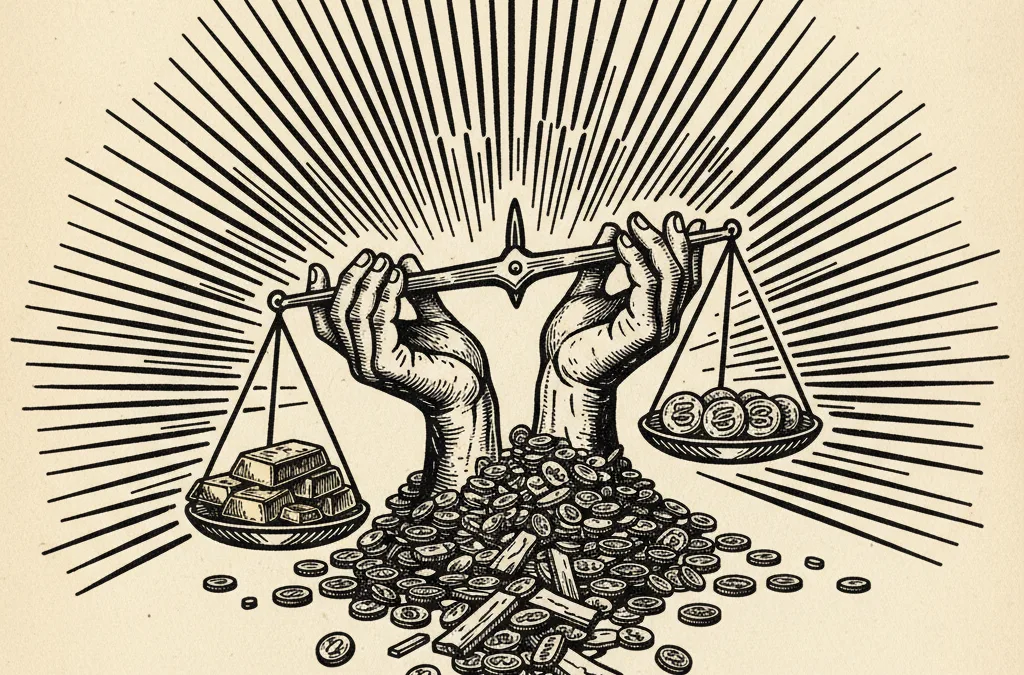
DEScycle and Mitsubishi have partnered to recover precious metals from electronic waste in Japan, targeting gold, silver, platinum, and palladium extraction as prices make secondary supply economics increasingly attractive.
What to know
-
DEScycle and Mitsubishi have partnered to scale precious metals recovery from e-waste in Japan, targeting gold, silver, platinum, and palladium extraction.
-
With gold at $5,102.80/oz and palladium up 3.4% on the week to $1,691/oz, the economics of urban mining have improved sharply.
-
Japan generates an estimated 2–3 million tonnes of e-waste annually, containing concentrations of precious metals far exceeding those found in conventional ore bodies.
What happened
DEScycle, a specialist in electronic waste processing technology, and Mitsubishi - one of Japan’s largest industrial conglomerates - have entered a strategic partnership to advance precious metals recycling from e-waste within Japan. The collaboration aims to deploy DEScycle’s hydrometallurgical extraction technology at scale, targeting recovery of gold, silver, platinum group metals, and critical minerals from discarded electronics.
The timing is notable. Gold is trading at $5,102.80/oz after a 1.03% gain over the past month, while silver has climbed 3.00% to $84.53/oz. Platinum has surged 4.58% on the week to $2,169.80/oz, and palladium sits at $1,691/oz - up 3.43% weekly. At these price levels, recovering precious metals from circuit boards, connectors, and catalytic components becomes more economically viable.
A single tonne of high-grade electronic waste can contain 300–400 grams of gold - roughly 10 to 15 times the concentration found in a tonne of typical gold ore. That gap has widened in economic terms as extraction costs for primary mining have escalated alongside energy and labour inflation.
Who’s involved
DEScycle brings proprietary hydrometallurgical processing - a lower-energy, lower-emission alternative to traditional smelting that uses chemical solutions to selectively dissolve and recover target metals. Mitsubishi’s involvement signals serious industrial intent; this is not a pilot project from a startup. Mitsubishi’s metals division already operates one of the world’s largest precious metals refining networks, giving the partnership immediate access to downstream processing, logistics, and global distribution.
Japan is a particularly strategic location. The country is the world’s third-largest generator of e-waste by volume, yet it imports virtually all of its primary precious metals. The concept of “urban mining” - treating accumulated electronic waste as an ore body - has been a policy priority in Tokyo for over a decade, but commercial-scale operations have lagged behind ambition.
Why it matters
Secondary supply from recycling currently accounts for roughly 25–28% of annual gold supply globally, with BIS quarterly data consistently reflecting central bank and institutional awareness of supply-side constraints. Any meaningful expansion of recycling capacity adds a structural buffer against primary supply disruptions - whether from geopolitical risk, permitting delays, or declining ore grades at major mines.
This partnership reflects the convergence of three forces: record-high precious metals prices making recovery economics more attractive, tightening environmental regulations in Japan and the EU pushing e-waste away from landfill, and growing recognition that critical minerals embedded in electronics - including palladium and platinum essential for hydrogen fuel cells and automotive catalysts - represent a strategic vulnerability if left unrecovered.
The gold/silver ratio at 60.4 also tells a story. Silver’s relative outperformance this month suggests industrial demand narratives - including recycling and green technology - are gaining traction alongside traditional safe-haven flows. Platinum’s 4.58% weekly surge reinforces the same theme: metals with dual monetary and industrial identities are being repriced.
For the broader market, every tonne of e-waste processed in Japan is a tonne that doesn’t need to be mined in South Africa, Russia, or Peru. That’s a quiet but meaningful shift in the supply geography of precious metals.
What to watch
Three things matter here. First, whether Mitsubishi discloses target throughput volumes - the difference between processing 10,000 and 100,000 tonnes annually is the difference between a footnote and a supply-side event. Second, Japan’s upcoming critical minerals strategy update, expected mid-2026, which could include subsidies or mandates that accelerate urban mining adoption. Third, whether other major refiners - particularly in South Korea and Germany - announce competing partnerships.
Gold is holding above $5,100 and platinum group metals are rallying hard, but the key question is throughput: how much metal can actually be recovered at scale, and how fast can capacity ramp.
This article is for informational purposes only and does not constitute financial advice. Always do your own research before making investment decisions.